


[Customer quote placeholder. 2 to 3 sentences from a billing director or operations leader at a municipal utility, MSO, or property management company. Focus on time saved per cycle or exception backlog reduction.]

Traditional systems treat customer information as a static database to maintain. MultiBilling rebuilds the customer lifecycle as a live event stream. Every change to customers, locations, meters, and assets surfaces in the same operational view, so the issues that used to land on bills get resolved upstream. Move-ins, move-outs, and meter exchanges flow through guided workflows with required fields and date validation in place. Stale data stops reaching the billing engine, and customer service teams reclaim more than half of their monthly labor for higher-value work.
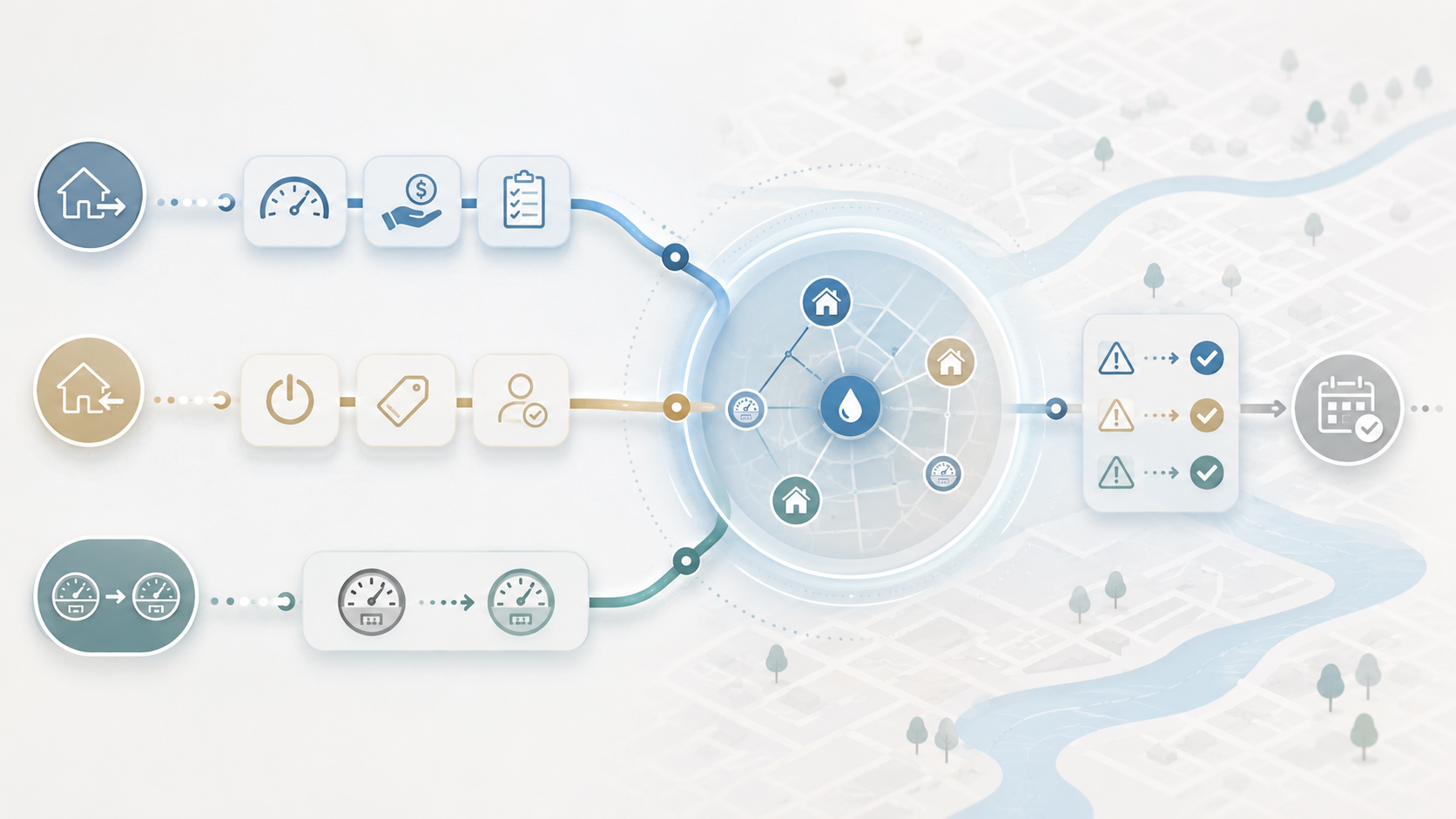
Every change streams into the same operational view. A move-out triggers the final read prompt, the deposit refund check, and the close-out checklist. A move-in records the service start, the rate assignment, and the welcome flow. Meter exchanges link the old and new device with the cutover read. Instead of a database that quietly accumulates updates between billing cycles, the CIS becomes a moving picture of who is connected, where, and how. Issues that used to surface during the next bill run get resolved the day they happen.
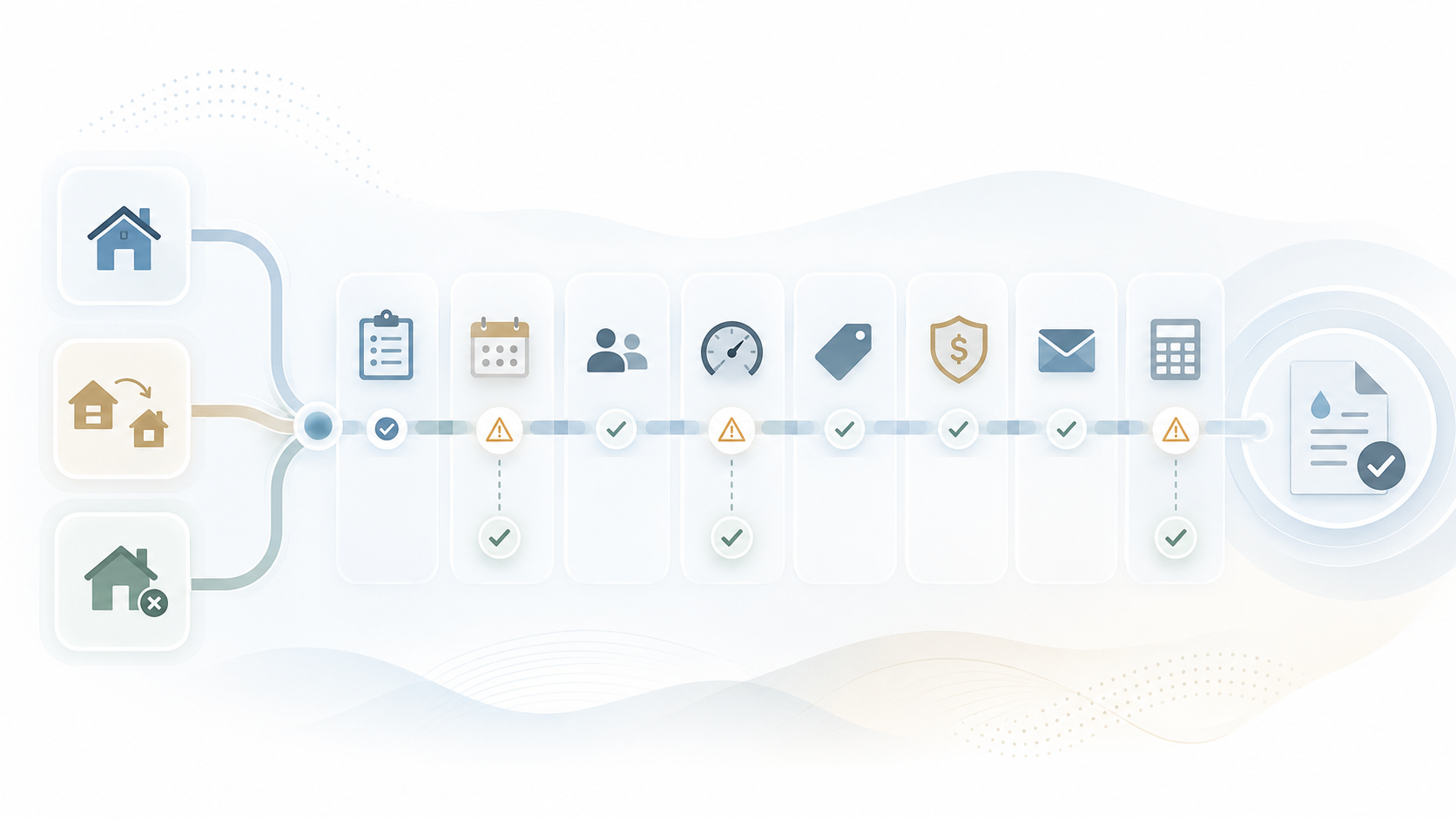
Guided workflows walk users through service starts, transfers, and ends, capturing required information, validating effective dates, managing ownership or occupancy changes, and preventing the small errors that used to create billing problems later. A new tenant arrives, the rep enters the move-in, and the system confirms the read, the rate, the deposit, the notification, and the prorate logic in one pass. The next cycle bills correctly because the front-end captured cleanly.
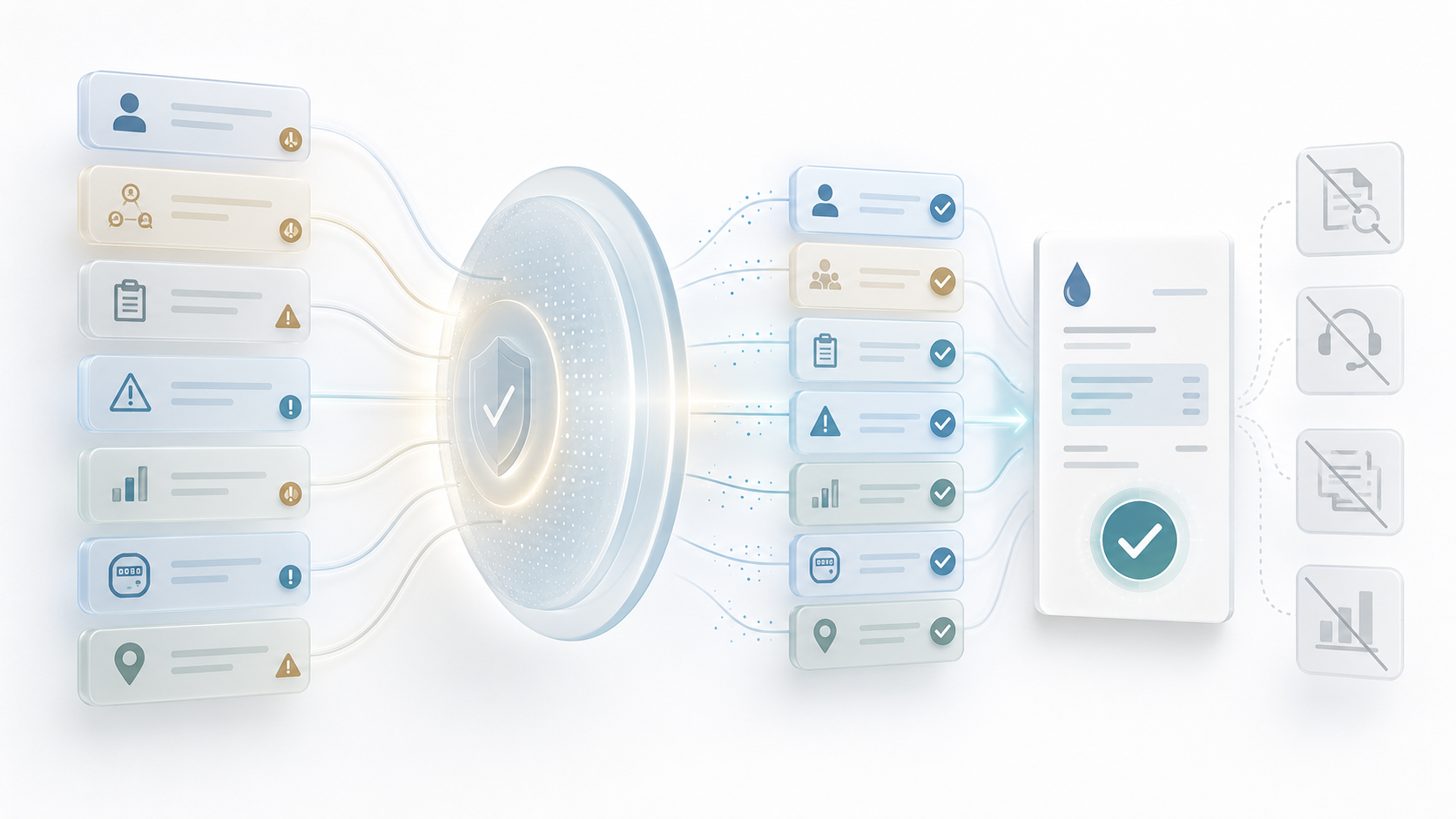
Outdated customer information is the root cause of most downstream billing exceptions. MultiBilling surfaces missing data, inconsistent relationships, unresolved incidents, incomplete service requests, unusual account activity, delinquency risks, and meter or location mismatches before the cycle runs. Exceptions get cleaned where they originated, not corrected after customer service receives the call. The bill is right the first time because the underlying data was right the day it changed.
[Customer quote placeholder. 2 to 3 sentences from a billing director or operations leader at a municipal utility, MSO, or property management company. Focus on time saved per cycle or exception backlog reduction.]
Trusted by Utility & Property Operations Teams


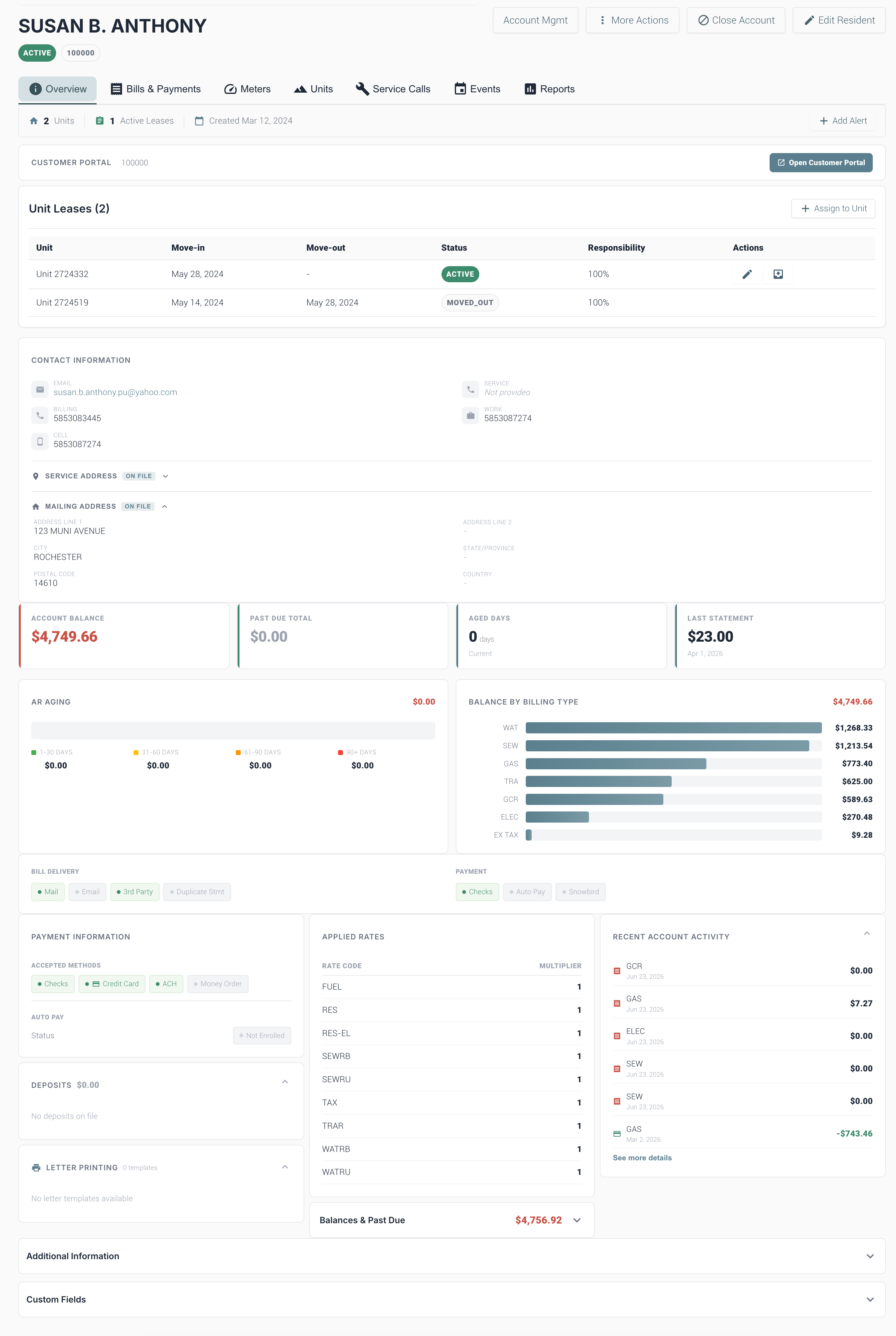
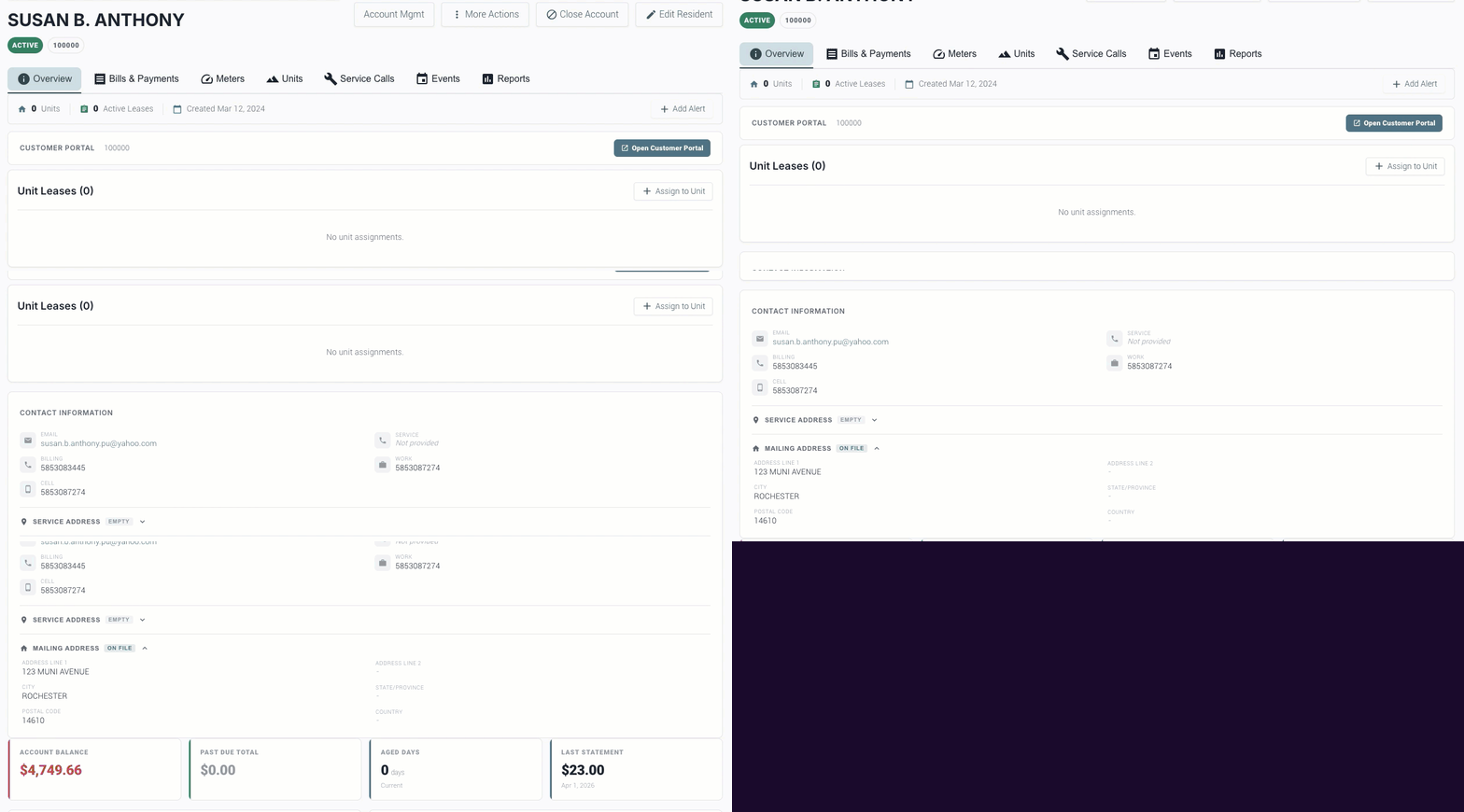
Use this section to view or open the customer portal associated with this account. The portal gives customers access to self-service options.
Use the tabs to move between key areas of the customer account, including overview details, bills and payments, meters, units, service calls, events, and reports.
This table shows the units connected to the customer, including move-in and move-out dates, lease status, responsibility percentage, and available actions.
This section stores the customer’s email address and phone numbers. Use it to confirm contact details before sending notices, making calls, or reviewing account information.
This card shows the customer’s current account balance. Use it as a quick reference when reviewing outstanding charges.
This card shows the amount currently past due. A zero balance here means the customer does not have any overdue charges at this time.
This card shows how long the account balance has been outstanding. Use it to quickly understand the account’s aging status.
This card shows the most recent statement amount and date. Use it to confirm the latest billing activity on the account.
The AR Aging section breaks down overdue balances by age range, helping you understand how long amounts have been outstanding.
This chart shows the customer’s balance by billing type, such as water, sewer, gas, trash, or other charges.
This section shows how the customer receives bills, such as mail, email, third party delivery, or duplicate statements.
This section shows the customer’s payment setup, including available payment methods and whether autopay is enabled.
Use this section to review accepted payment methods and autopay status for the customer account.
This section shows whether the customer has any deposits on file. Expand it to review deposit details when available.
This section shows available letter templates for the customer account. Use it when generating account notices or printed communications.
This table shows the rates currently applied to the customer account. These rates help determine how charges are calculated during billing.
This section displays recent charges, payments, and account activity. Use it to quickly review what has recently changed on the account.
This summary shows the combined balance and past due amount for the account.
Expand this section to view extra account details that may not appear in the main customer overview.
Custom fields store additional information specific to your organization’s setup.
Bring us a sample of the move-ins your team processed last month, and we will show you the same workflows running in MultiBilling. You will see the guided capture, the validation prompts, and the downstream billing readiness check before the cycle ever runs. The CIS your team needs is the one that catches the issue before it becomes a bill.
Schedule a demo to explore the platform in detail and see how MultiBilling fits your operations and take the next step toward implementation and purchase.
.png?width=1448&height=1086&name=Futuristic%20Screenshot%20of%20MultiBilling%20(1).png)