[Customer quote placeholder. 2 to 3 sentences from a billing director or operations leader at a municipal utility, MSO, or property management company. Focus on time saved per cycle or exception backlog reduction.]
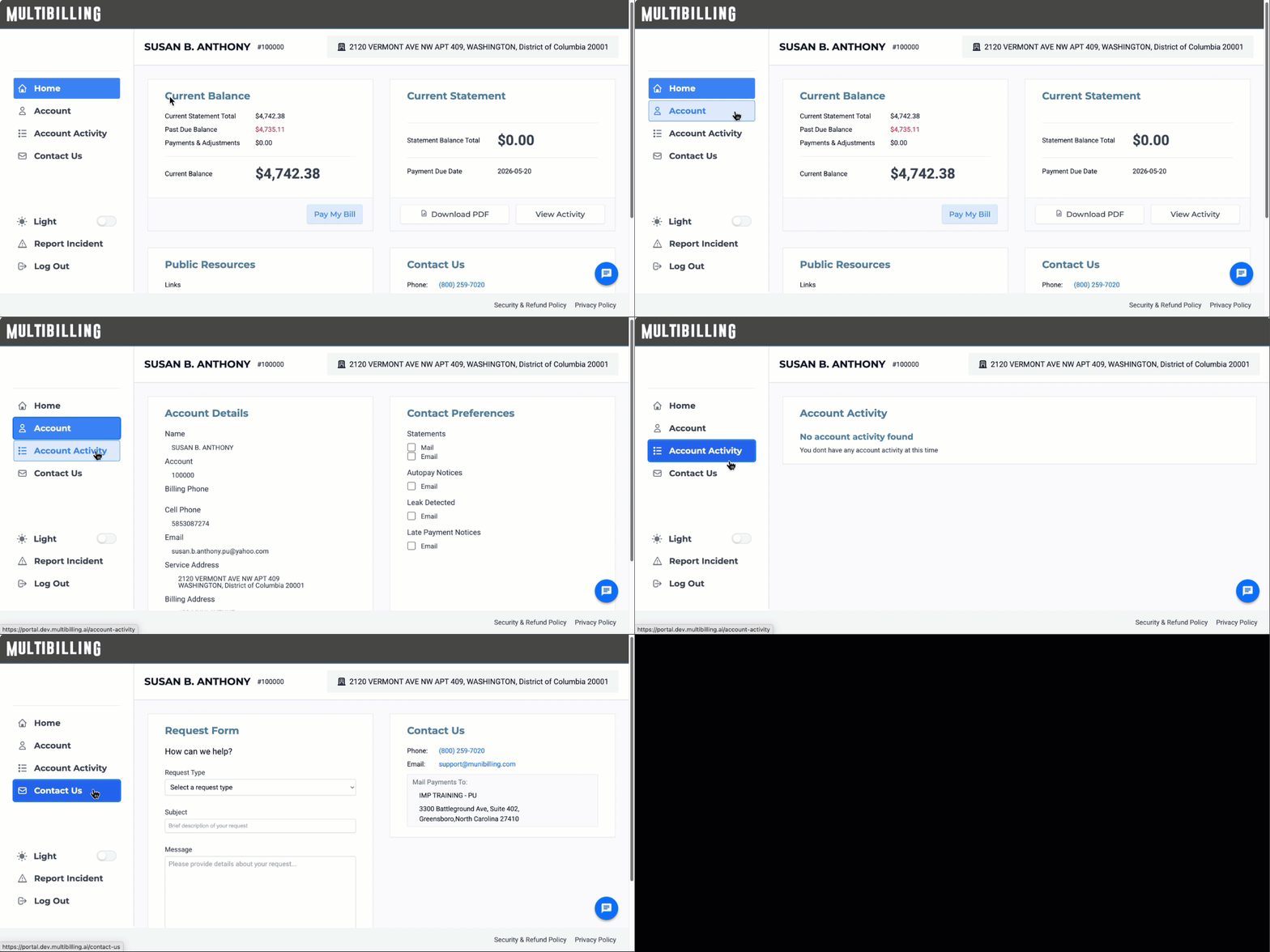
Most platforms treat the customer portal as a payment page bolted onto the back office. MultiBilling rebuilds the digital customer experience with a complementary Customer Portal and Mobile App that act as a 24x7x365 digital front door. Structured intake captures every request and issue. Proactive notifications anticipate customer needs. AI-guided self-service handles common questions in plain language. Customers resolve payments, balance questions, move-ins, move-outs, service requests, and issue reports without calling the office. Customer service teams reclaim more than half of their monthly labor for higher-value work.

Annual updates, fee changes, and program adjustments happen inside the billing workflow itself. The handoff to technical staff and vendor scripts that used to delay every rate cycle is gone. Bulk changes apply across large groups of customers, residents, services, meters, locations, properties, municipalities, or managed entities without repetitive manual entry. Annual rate updates, fee changes, tax updates, surcharge adjustments, and program-based rate changes process inside the same operational context where bills are prepared.
The financial and customer impact of a rate change is visible before bills generate. Unusual increases, missing accounts, and configuration errors get fixed upstream instead of after the cycle. Users preview the financial and customer impact, confirm expected outcomes, and identify exceptions before they affect customer bills. Rate-related exceptions like accounts without assigned rates, locations excluded from an expected group, services with conflicting effective dates, unusual bill increases, and changes outside expected thresholds flag for review.
Every change flows through effective-date controls, role-based approval, and audit history. Mid-cycle, retroactive, seasonal, and board-approved updates apply safely at scale. Effective-dated rate management ensures the correct rate at the correct time. Bulk changes flow through role-based permissions, approvals, and separation of duties so only authorized users create, modify, approve, or apply rate changes that affect customer billing. Every change preserves a record of what changed, who changed it, when, which accounts were affected, what approval was provided, and how it impacted the cycle.
Step 01
Most platforms treat the customer portal as a payment page bolted onto the back office. MultiBilling rebuilds the digital customer experience with a complementary Customer Portal and Mobile App that act as a 24x7x365 digital front door. Structured intake captures every request and issue. Proactive notifications anticipate customer needs. AI-guided self-service handles common questions in plain language. Customers resolve payments, balance questions, move-ins, move-outs, service requests, and issue reports without calling the office. Customer service teams reclaim more than half of their monthly labor for higher-value work.
Step 02
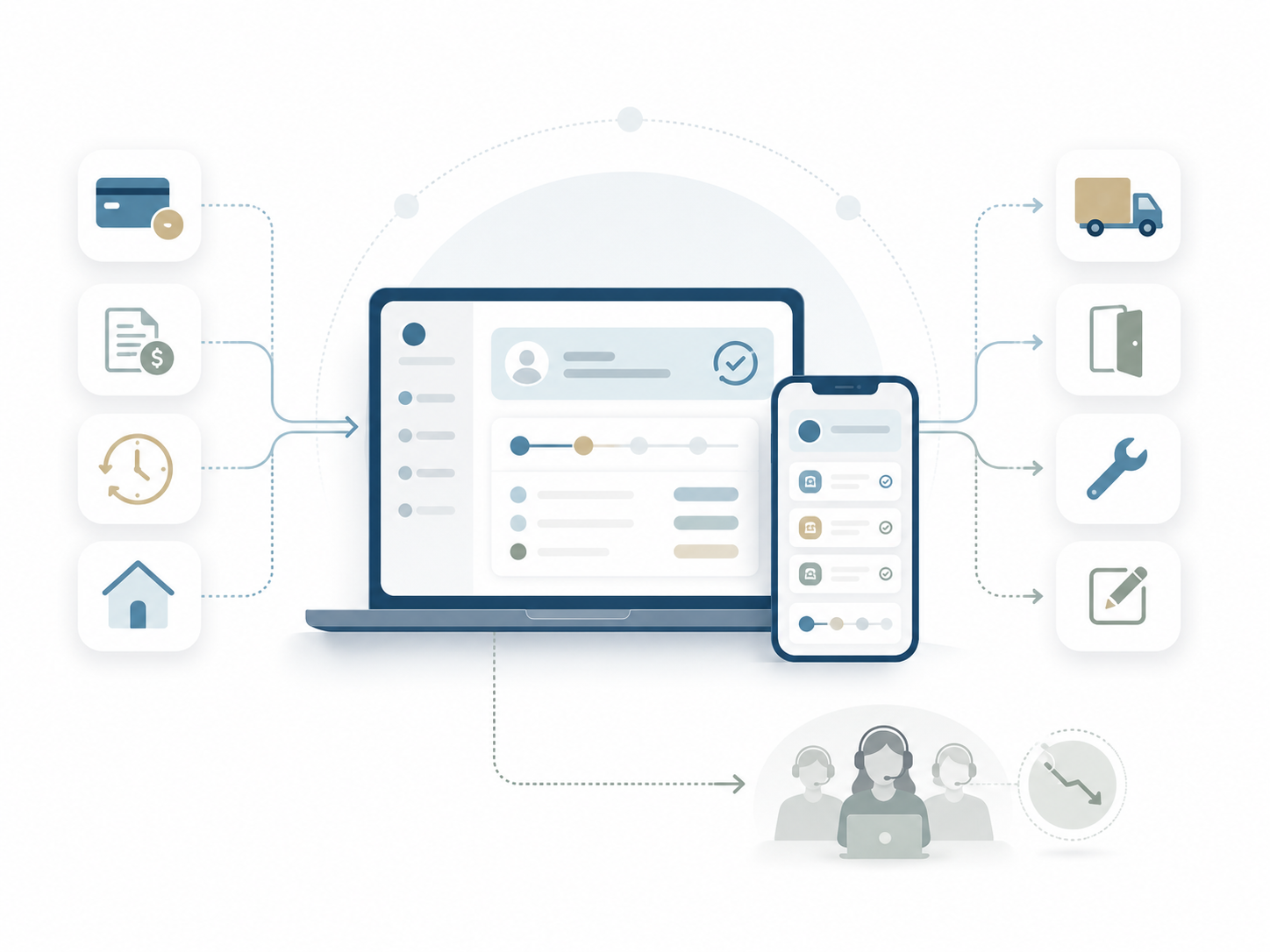
Customer service reps stop spending the morning fielding routine status checks because customers see status in the portal. The team handles the calls that genuinely need human judgment instead of being buried in payment confirmations and balance inquiries. Digital intake captures complete information so the calls that do come in arrive with the context attached. Service request volume routes more efficiently because the portal categorizes correctly at submission. Managers see digital channel metrics alongside call metrics. Across customer service, the routine status-check and form-handling work drops sharply, and staff reclaim more than half of the customer service team’s monthly labor for higher-value work like collections recovery, complex disputes, and outreach.
Step 03
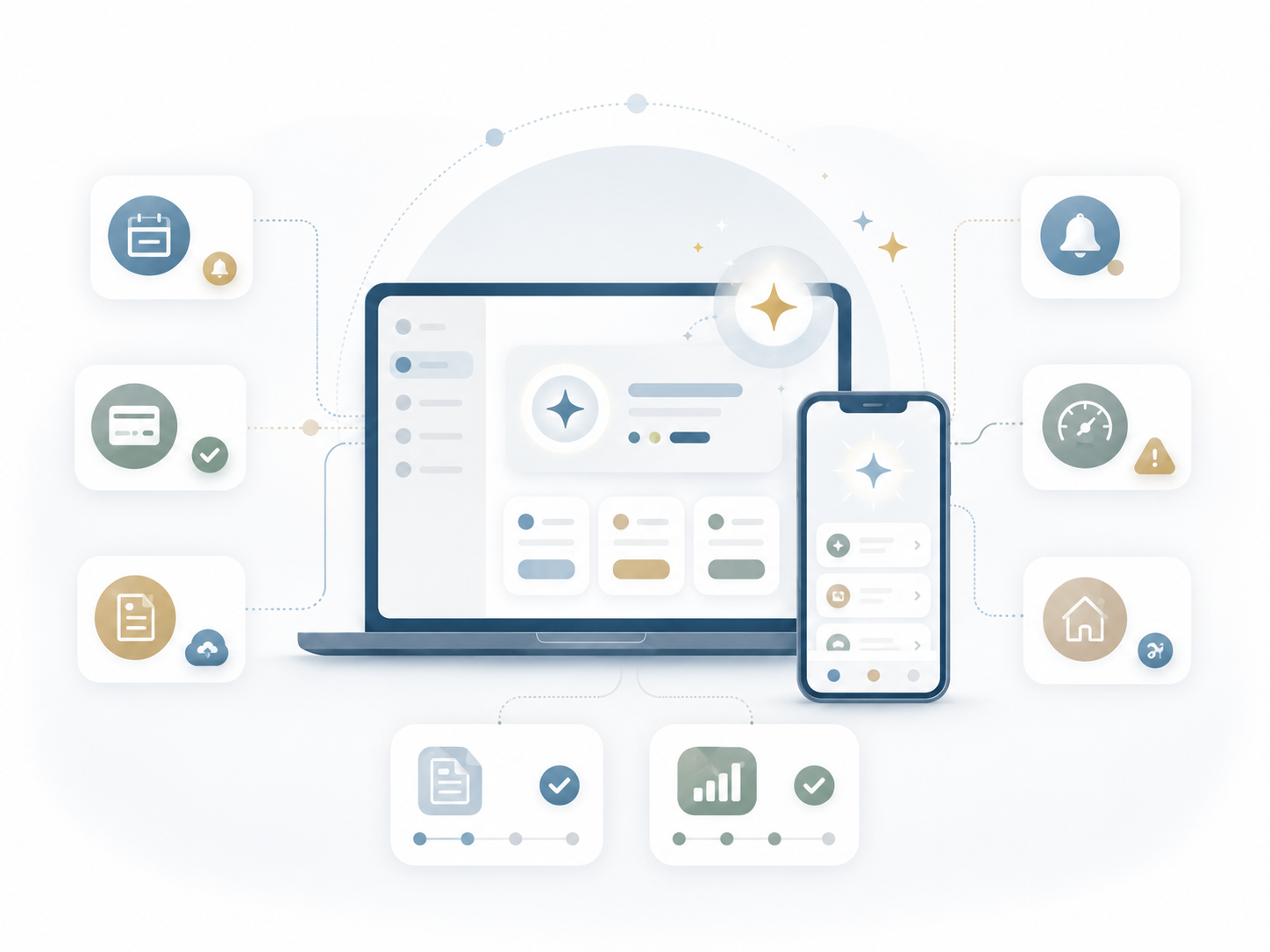
The Customer Portal and Mobile App connect to CIS for full customer lifecycle support, to billing for balance and bill access, to payments for transaction processing, to service requests for structured intake and tracking, to incident management for issue routing, and to the AI Assistant for in-channel guidance. Proactive notifications draw from the same event monitoring that powers operational alerts. Mobile-first design meets customers on the devices they already use. The result is a connected, observable, AI-ready digital customer experience that transforms support from reactive to anticipatory.
A complete digital customer experience that handles payments, service requests, issue reports, status tracking, and AI-guided help across portal and mobile app.
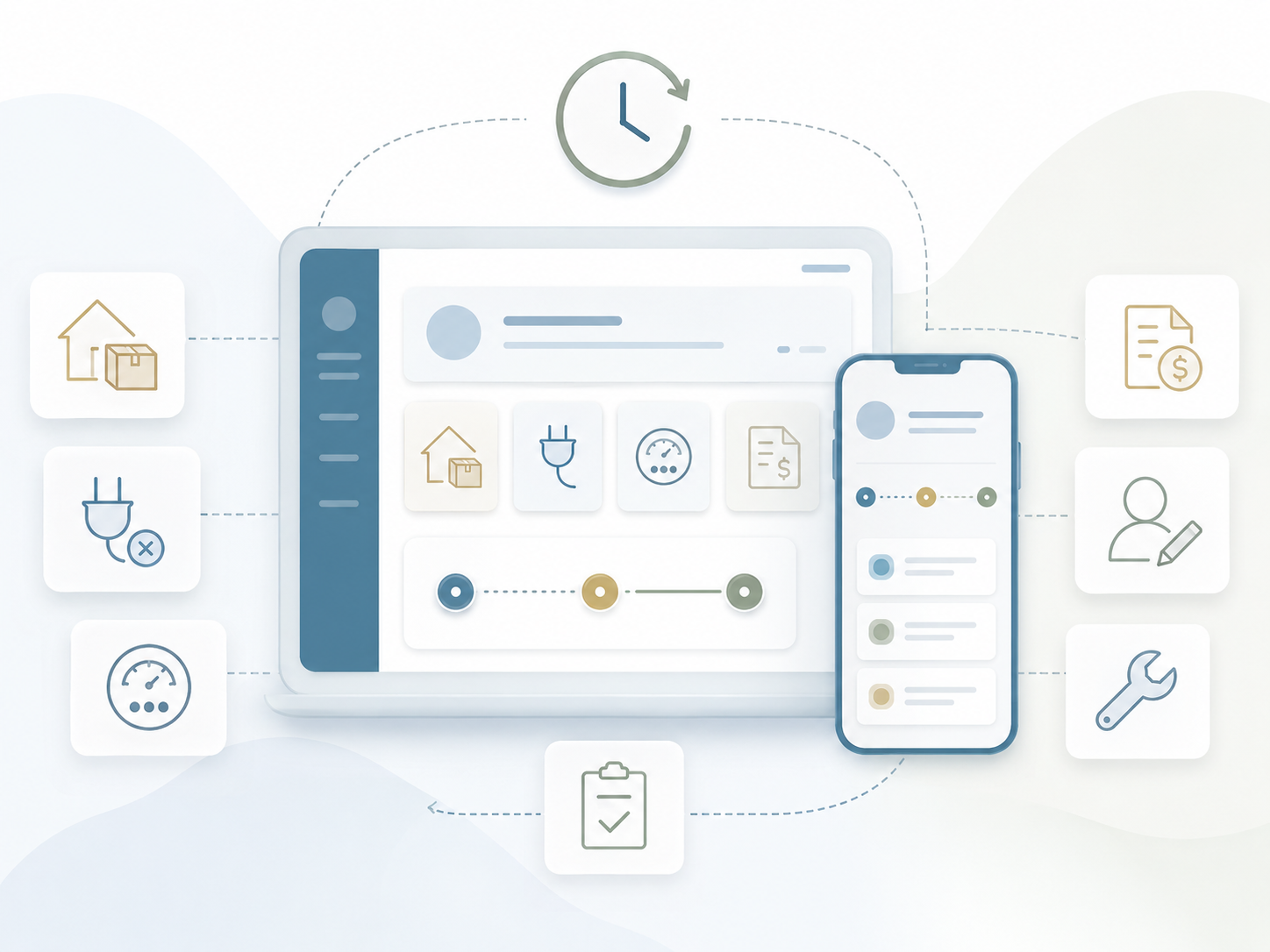
The portal and mobile app handle the full customer lifecycle, from applying for service through close-out at move-out.
Digital intake captures complete information at submission and routes requests and issues to the right workflow.
The portal becomes an anticipatory channel where the AI Assistant guides customers and proactive notifications keep them informed.
Universal search reaches across every operational record, returning context that matters for resolution.
Pin the KPIs, alerts, reports, and workflow shortcuts most relevant to each role.
The AI Assistant lives on the Home Page as a navigation partner.
[Customer quote placeholder. 2 to 3 sentences from a billing director or operations leader at a municipal utility, MSO, or property management company. Focus on time saved per cycle or exception backlog reduction.]
Trusted by Utility & Property Operations Teams
Send us a week of customer call topics, and we will show you which ones would have resolved through the portal and mobile app without a single phone call. You will see the AI Assistant guiding the conversation, the structured intake capturing the request, and the proactive notifications that prevent the call in the first place. The day routine status checks stop ringing the office is the day the customer service labor reclaim starts.
Schedule a demo to explore the platform in detail and see how MultiBilling fits your operations and take the next step toward implementation and purchase.