Standard Work, Standardized. Field-to-Office, One Workflow.

In most platforms, service work is logged as miscellaneous tickets tracked in spreadsheets and email threads. MultiBilling rebuilds Service Requests as an ITSM-aligned lifecycle that standardizes intake for every customer, location, meter, and asset request, coordinates field-to-office handoffs in one shared workflow, and closes every request with the audit history it deserves. Move-ins get faster. Meter rereads land at the right address. Callbacks drop. Field service and customer service teams reclaim more than half of their monthly labor for higher-value work.

Search Bar

Three Ways MultiBilling Service Requests Changes Daily Work

Choose Here
  • ITSM discipline for service work
  • One workflow, field to office
  • Closed with audit history

ITSM discipline for service work

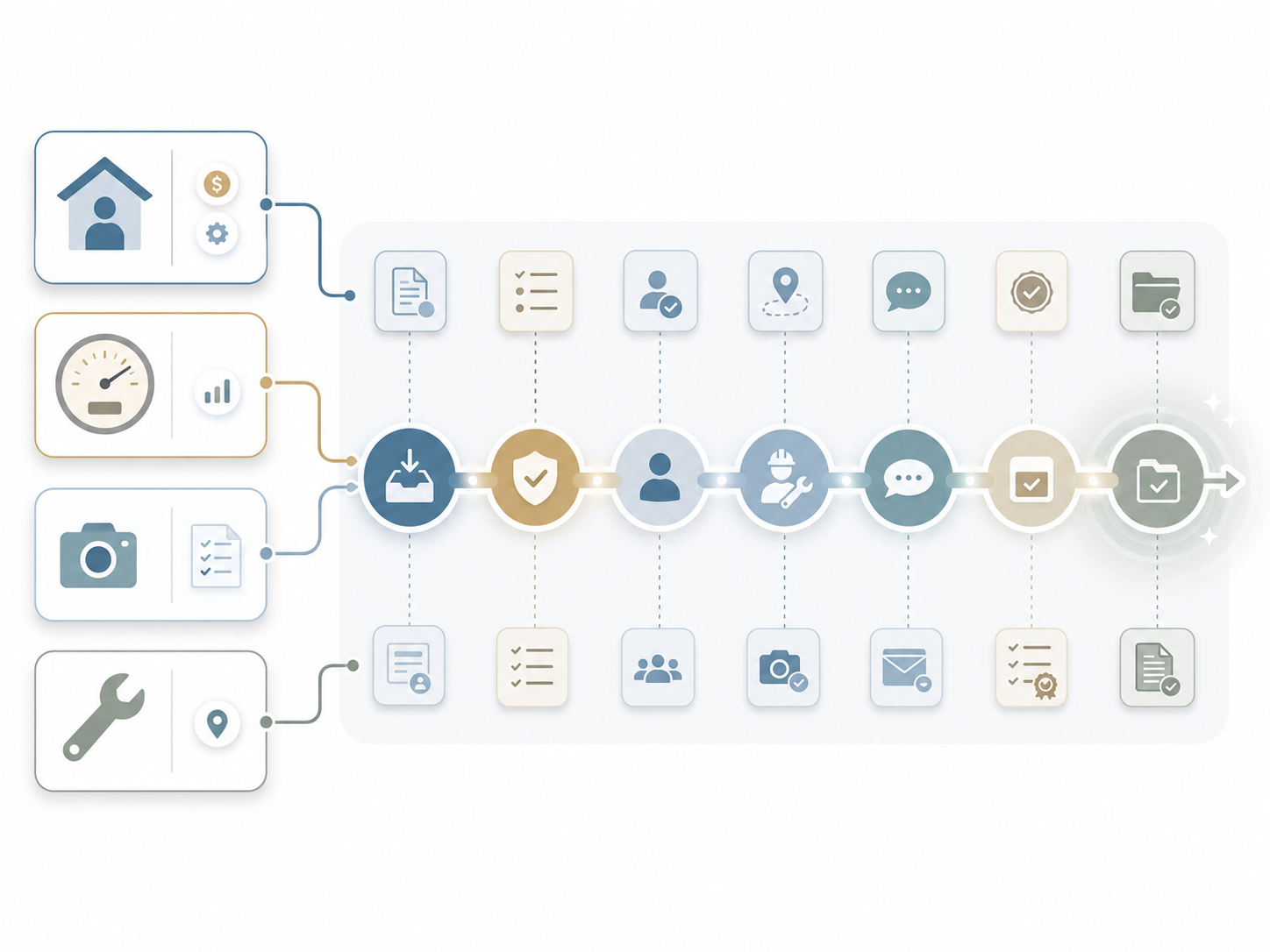
Move-ins, meter rereads, inspections, and field requests all flow through a structured lifecycle for intake, validation, assignment, fulfillment, communication, completion, and closure. The spreadsheet-and-email approach to standard work goes away. Each request type carries its own guided steps, required fields, and completion criteria. Move-ins capture the deposit prompt and the rate assignment. Meter rereads carry the prior reading and the variance threshold. Inspections include the photo evidence checklist. Standard work becomes consistently performed work.

One workflow, field to office

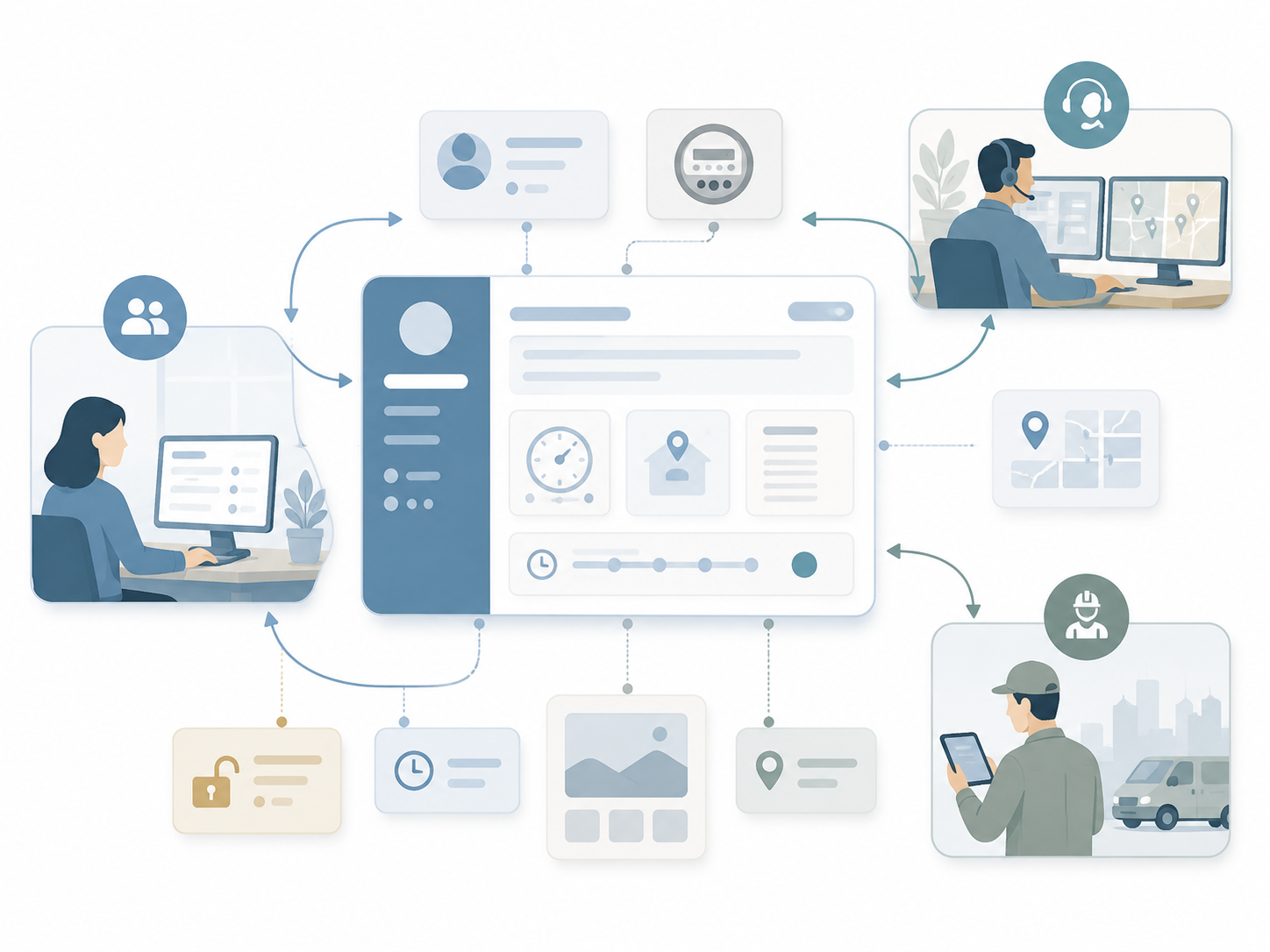
Office staff, dispatch, and field technicians work from the same record with the same context. The handoff gaps that cause callbacks, delays, and missed completion windows are engineered out. A move-in submitted at the office reaches the field with the customer details, the meter information, the address verification, and the access notes intact. A field reading returns to the office with the timestamps, photos, geotags, and notes already attached. Front-office teams, billing teams, customer service, field technicians, collections, and managers share one operational view.

Home Dashboard-1

Closed with audit history

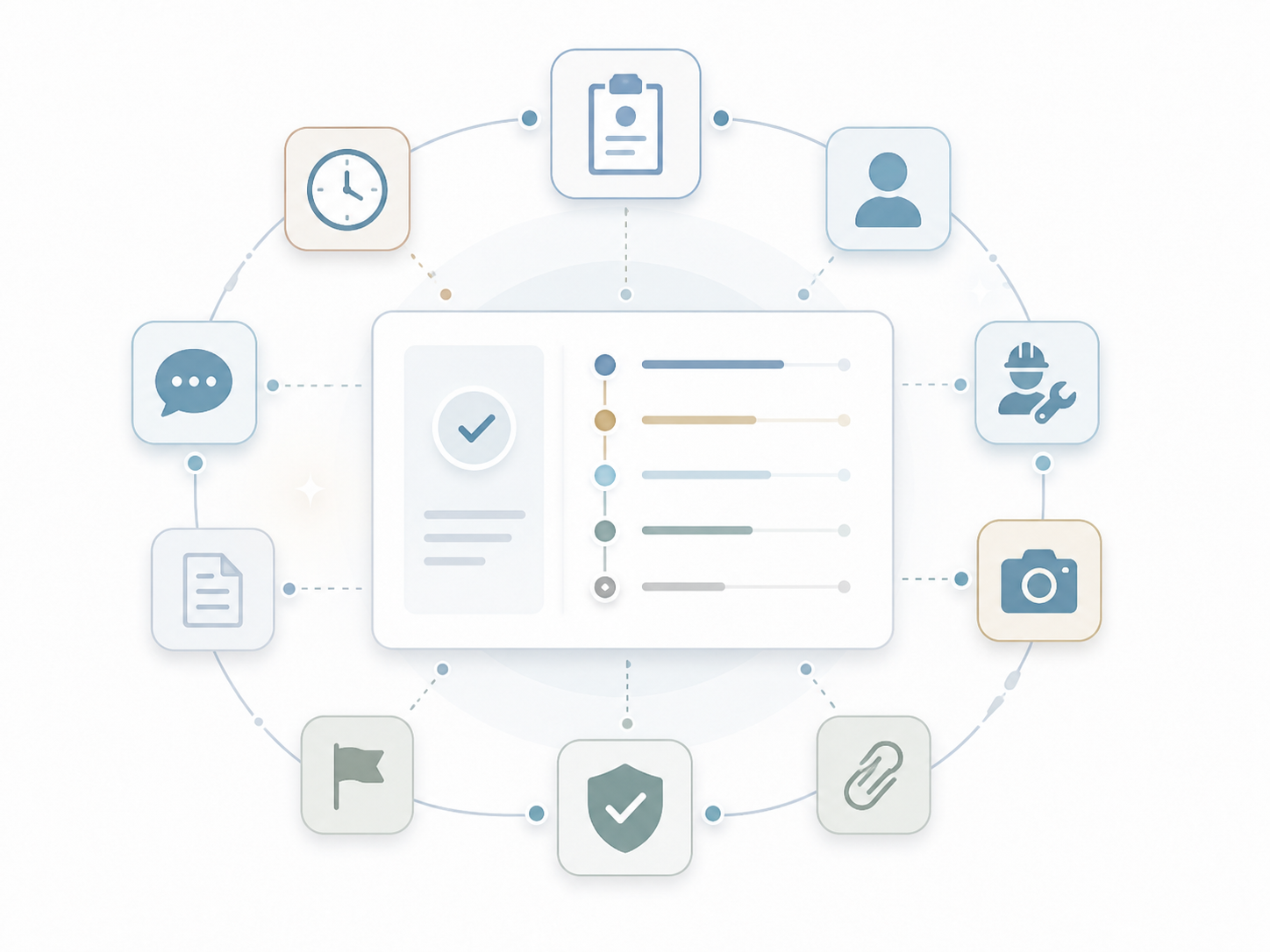
Every request preserves the full record of intake, assignment, field actions, evidence, and resolution. Compliance, dispute review, and continuous improvement start with the data already in place. Notes, attachments, completion details, time stamps, and approvers all live with the request. When a customer calls weeks later about a service event, the rep pulls up the full history in seconds. Audit prep stops being a reconstruction project.

AI Help

How It's Different

Step 01

Why MultiBilling Service Requests Stands Apart

Conventional platforms log standard service work as one-off tickets, tracked in queues, spreadsheets, email threads, and sticky notes. Each request type has its own informal procedure. Handoffs happen by phone call. Closure happens when somebody marks “done” with no audit trail. MultiBilling rebuilds Service Requests as an ITSM-aligned lifecycle with structured intake, guided fulfillment, shared field-office workflow, and audit-grade closure. Before, every service request was a paper trail in disguise. After, every request is a tracked workflow with the context, the evidence, and the history attached.

ChatGPT Image May 20, 2026, 01_12_24 PM-1

What Changes for Your Team

Step 02

Office staff submit move-ins, move-outs, and account changes through guided intake instead of free-form notes. Dispatch routes work with full context attached. Field technicians arrive at the right address with the right customer info and the right access details. Customer service reps answer status questions without calling the field. Managers monitor request aging, completion times, workload distribution, and category trends. Compliance teams pull complete histories. Across field service and customer service, the duplicate effort, missing information, callbacks, and avoidable delays drop sharply, and staff reclaim more than half of the field service and customer service teams’ monthly labor for higher-value work.

ChatGPT Image May 22, 2026, 03_45_39 PM

Built for ITSM-Aligned Service Delivery

Step 03

Service Requests connect to CIS for customer and asset context, to incident management for related issues, to mobile field workflows for execution, to billing for service activation and deactivation, and to reporting for service-level visibility. Event-based monitoring triggers notifications across the request lifecycle. The AI Assistant guides users through correct request type selection, required steps, and next-best actions. Knowledge content surfaces inside the workflow. Service work becomes a connected, observable, AI-ready discipline that supports continuous improvement.

ChatGPT Image May 22, 2026, 03_49_03 PM

What MultiBilling Service Requests Delivers

A structured ITSM lifecycle that standardizes intake, coordinates execution, and closes every request with full audit history.

Structured Intake and Guided Fulfillment

Standard work moves through standard workflows. Each request type follows guided steps that capture the right information at the right time.

  • ITSM best practices: Service Requests manage standard repeatable work through intake, validation, assignment, fulfillment, communication, completion, and closure.
  • Structured intake: Critical details capture up front: customer, account, location, meter, asset, service type, requested date, priority, documents, notes, and attachments.
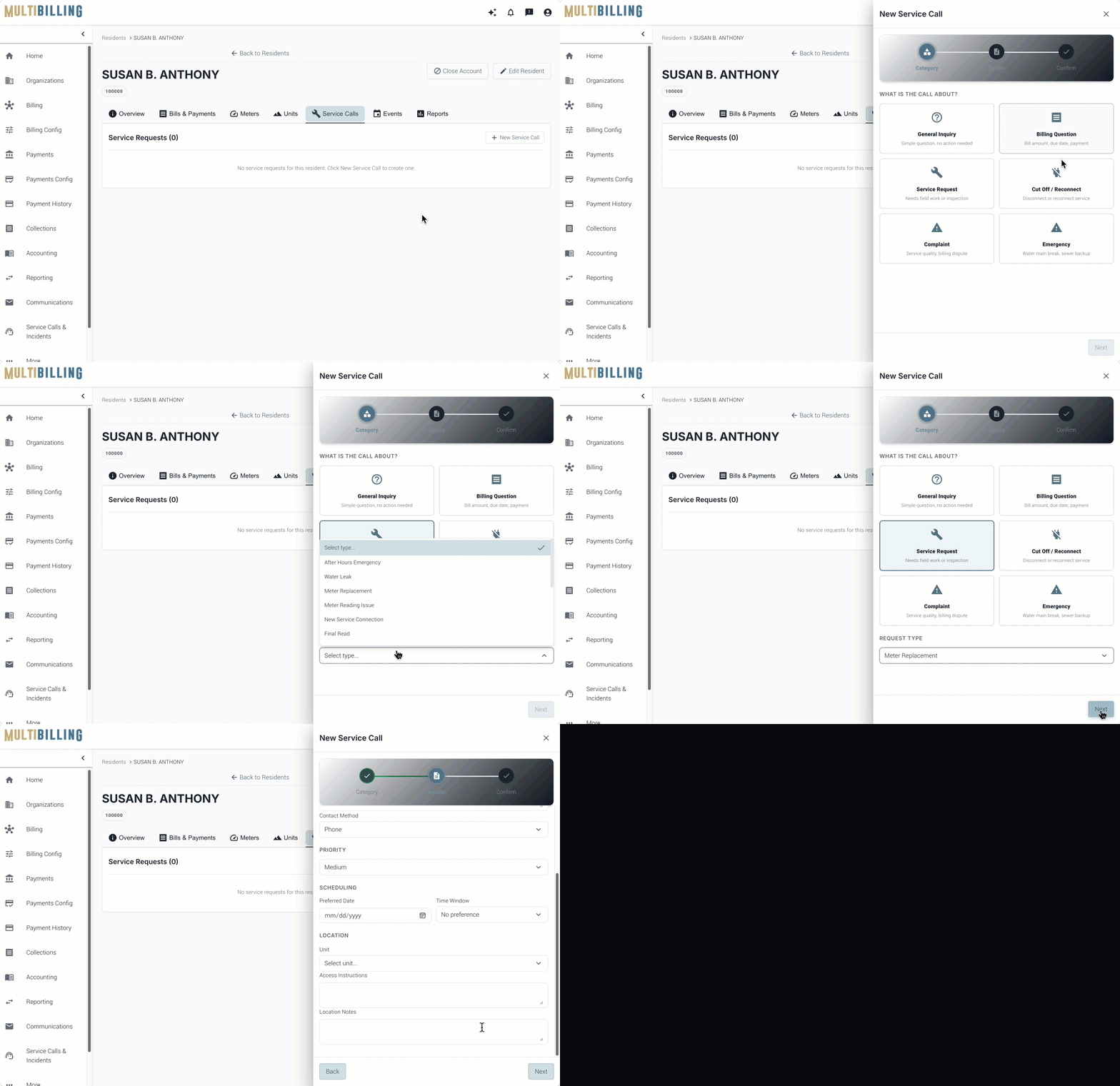
  • Guided fulfillment workflows: Move-ins, move-outs, activations, disconnects, reconnects, meter rereads, meter repairs, meter replacements, inspections, backflow certification, account changes, and customer-requested updates each follow consistent steps.

Field and Office Coordination

Front-office, dispatch, and field staff share one workflow with one record. Handoffs preserve context, and ownership stays clear.

  • Standardized request categories: Service type, department, responsibility, location, entity, or workflow category drive routing and reporting.
  • Role-based assignment and ownership: Requests route to the right team, role, or user, improving accountability and preventing delays.
  • Integrated customer, location, meter, and asset context: Service Requests connect to the CIS so users see related customers, accounts, meters, assets, billing history, payments, deposits, incidents, and prior service work.

 Service-Level Visibility and Continuous Improvement

The platform turns service request data into operational intelligence for managers, leaders, and continuous improvement loops.

  • Field and office coordination: Front-office teams, billing, customer service, field technicians, collections, and managers share one workflow.
  • Service level visibility: Managers monitor request aging, response and fulfillment times, backlog, reassignment patterns, workload distribution, and category trends.
  • Auditability and completion history: Each request preserves intake, assignment, updates, field activity, notes, attachments, fulfillment, and closure details.

Check out the screen yourself!

You can interact with the dots below to learn more about the screen.

2026-05-21_14-23-29

Unfied Search and Discovery

Universal search reaches across every operational record, returning context that matters for resolution.

Customizable Dashboards

Pin the KPIs, alerts, reports, and workflow shortcuts most relevant to each role.

AI-Assisted Investigation

The AI Assistant lives on the Home Page as a navigation partner.


Built with billing operators, validated in production.

[Customer quote placeholder. 2 to 3 sentences from a billing director or operations leader at a municipal utility, MSO, or property management company. Focus on time saved per cycle or exception backlog reduction.]

review-future

Dr. Alice Bennett

AI Expert, MIT
Case Study

[Customer Name]

[X%]

[Outcome metric: reduction in billing exception backlog, hours reclaimed per month, days saved per cycle]

Ready to See MultiBilling in Action?

Bring us your most common service request types and a sample of the handoff problems your team faces today, and we will show you what they look like inside MultiBilling. You will see the guided intake, the field coordination, and the audit trail on real workflows. The day callbacks stop is the day your labor reclaim starts.

Schedule a demo to explore the platform in detail and see how MultiBilling fits your operations and take the next step toward implementation and purchase.

Futuristic Screenshot of MultiBilling (1)