


[Customer quote placeholder. 2 to 3 sentences from a billing director or operations leader at a municipal utility, MSO, or property management company. Focus on time saved per cycle or exception backlog reduction.]

Most platforms manage their own user passwords, multi-factor authentication, and credential databases, replicating credential risk and password-reset support burden in every system. MultiBilling rebuilds authentication as a federated single sign-on layer that delegates credentials and MFA to trusted identity providers like Microsoft and Google, and logs every sign-in, timeout, and provisioning change for audit. Password-reset tickets disappear. Session timeouts align with PCI DSS Requirement 8.1.8. IT and administration teams reclaim more than half of their monthly labor for higher-value work.
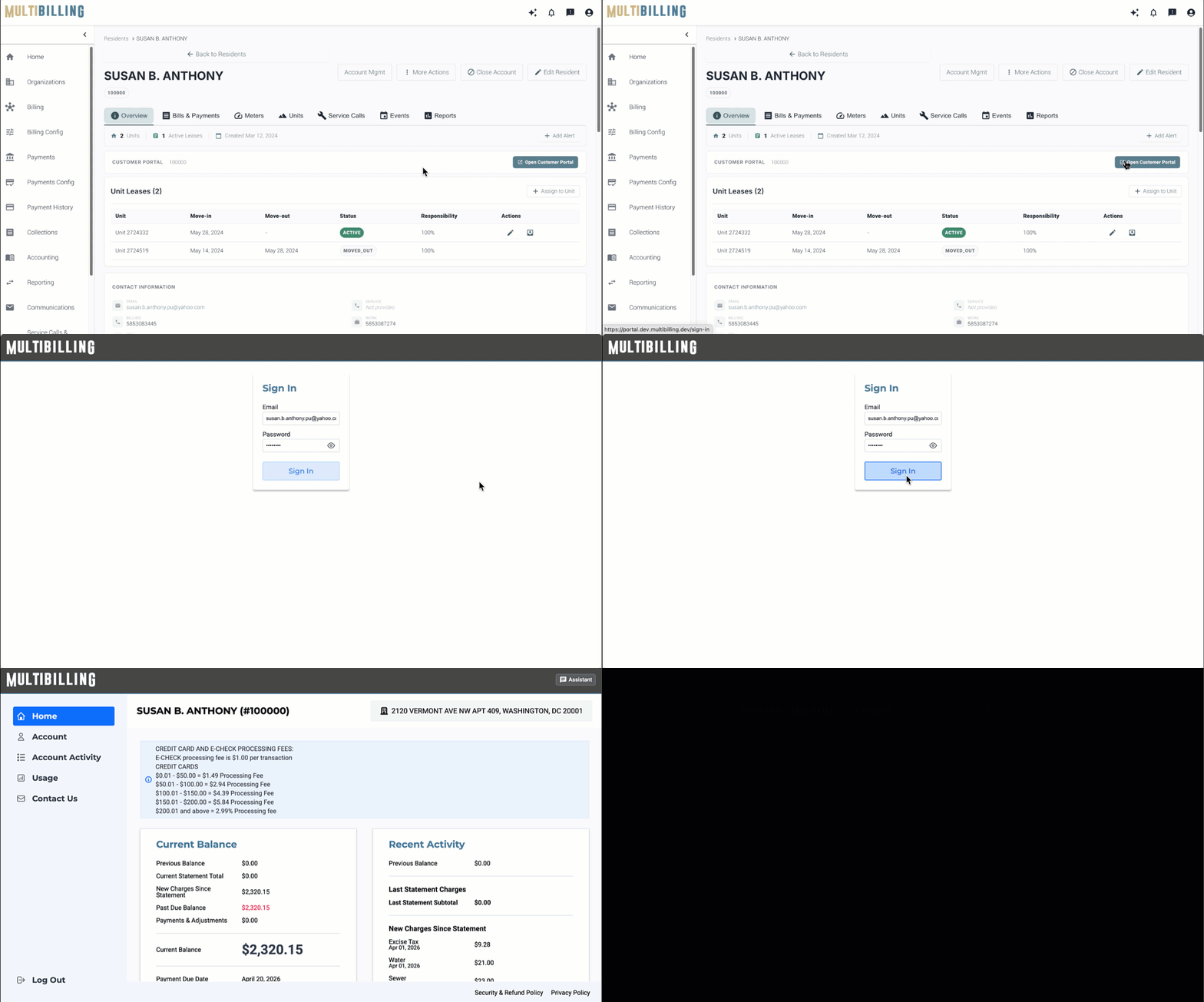
Staff, MSO, and Customer Portal users sign in with familiar federated identities instead of yet another vendor password. MFA delegates to the identity provider organizations already trust. The credential entry, password policy enforcement, and MFA are handled by Microsoft or Google, reducing password-related risk and aligning authentication with established security platforms. Federated sign-in options appear as the primary call to action on the login screen, creating a login experience aligned with modern platform standards.
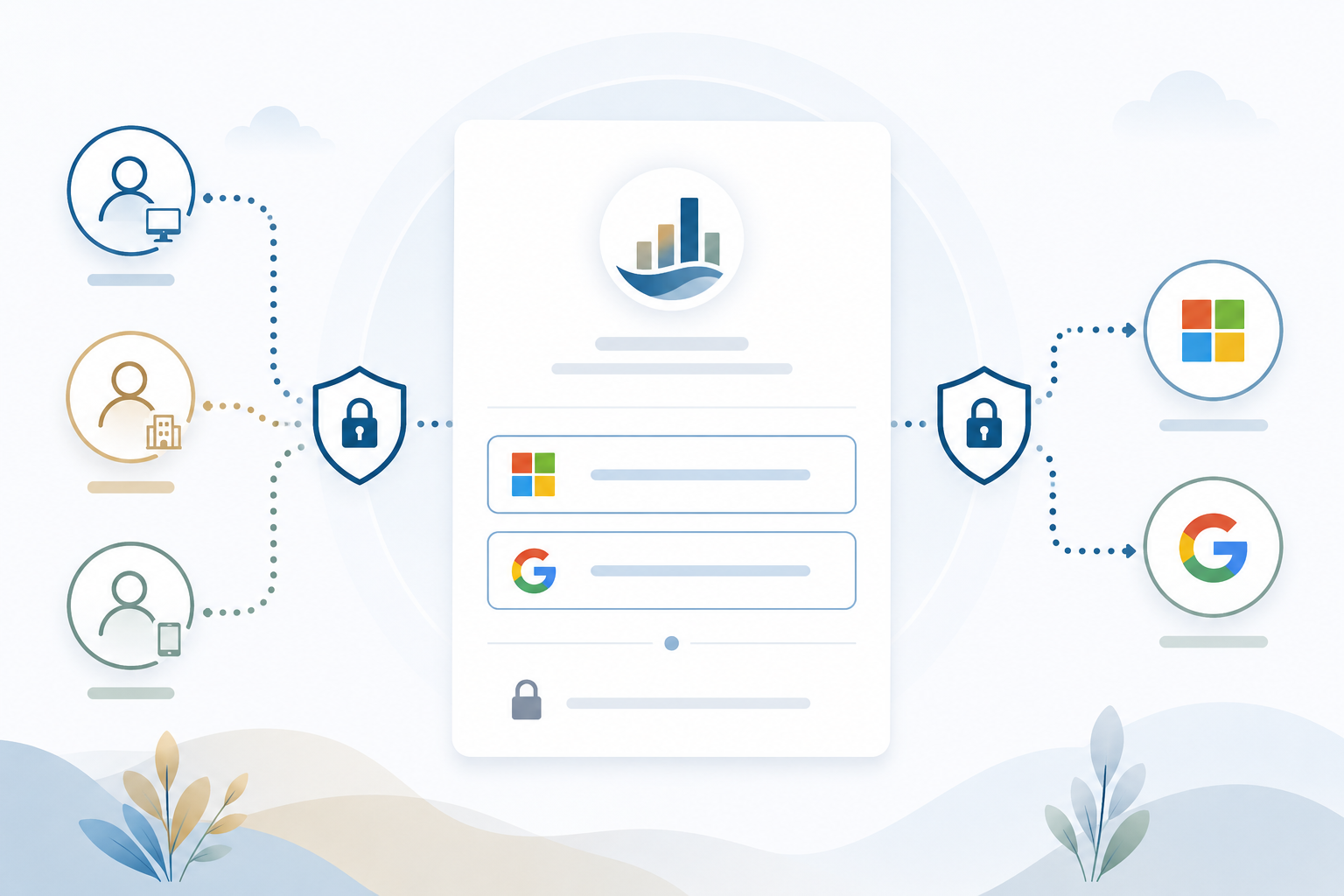
Session timeouts default to fifteen minutes for staff and MSO/client users per PCI DSS Requirement 8.1.8. Customer Portal sessions can run on a different timeout suited to lower-risk self-service. Realm-based security design applies different authentication and session management rules across MuniBilling staff, MSO/client users, and Customer Portal users. Security controls reflect the risk profile, role, and access pattern of each population. Compliance posture improves because the platform enforces the standard instead of relying on documentation.
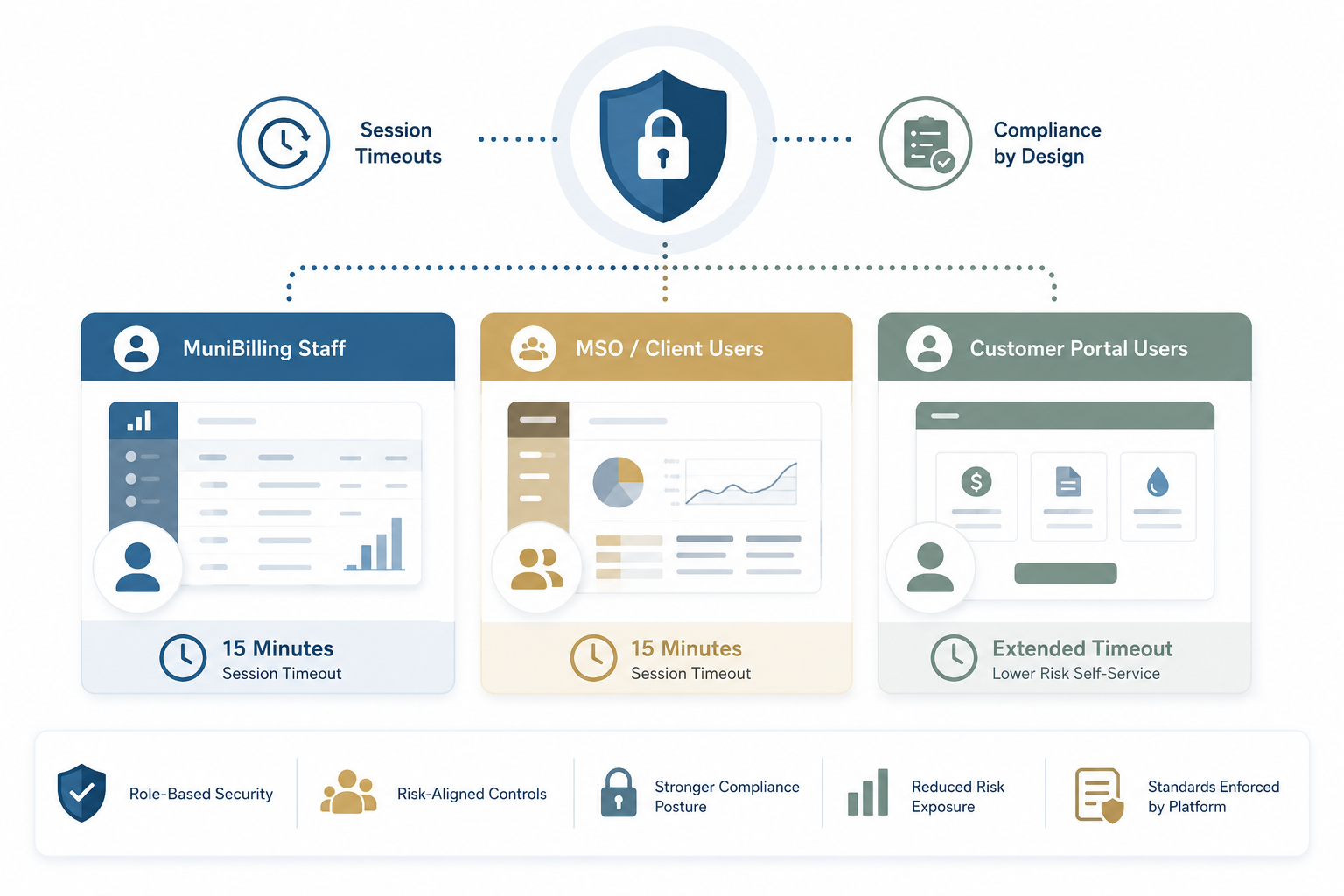
Every authentication event, session timeout, sign-out, and provisioning change logs with the user and timestamp attached. Compliance reviews, audit prep, and security investigations start with the data already in place. Federated sign-ins, sign-outs, and provisioning changes all preserve a comprehensive authentication audit trail. Organizations gain accountability, security review readiness, and compliance documentation without after-the-fact reconstruction.
[Customer quote placeholder. 2 to 3 sentences from a billing director or operations leader at a municipal utility, MSO, or property management company. Focus on time saved per cycle or exception backlog reduction.]
Trusted by Utility & Property Operations Teams


Bring us your current authentication policy and your last quarter’s password-reset ticket volume, and we will show you what federated SSO does to that workload inside MultiBilling. You will see Microsoft and Google sign-in, realm-specific session configuration, and the audit trail on a representative environment. The day password reset tickets stop hitting your help desk is the day the IT and administration labor reclaim starts.
Schedule a demo to explore the platform in detail and see how MultiBilling fits your operations and take the next step toward implementation and purchase.
.png?width=1448&height=1086&name=Futuristic%20Screenshot%20of%20MultiBilling%20(1).png)