[Customer quote placeholder. 2 to 3 sentences from a billing director or operations leader at a municipal utility, MSO, or property management company. Focus on time saved per cycle or exception backlog reduction.]
Conventional platforms fragment utility billing into disconnected modules organized around the way the database was designed. Users jump between screens just to complete a single task. MultiBilling designs the experience around the work itself, embedding analytics and business rules inside every workflow and connecting multi-entity context across the platform. Users move from information to action without leaving the workflow. The menu-hunting and context-switching that drain attention disappear. Operations teams reclaim more than half of their monthly labor for higher-value work.
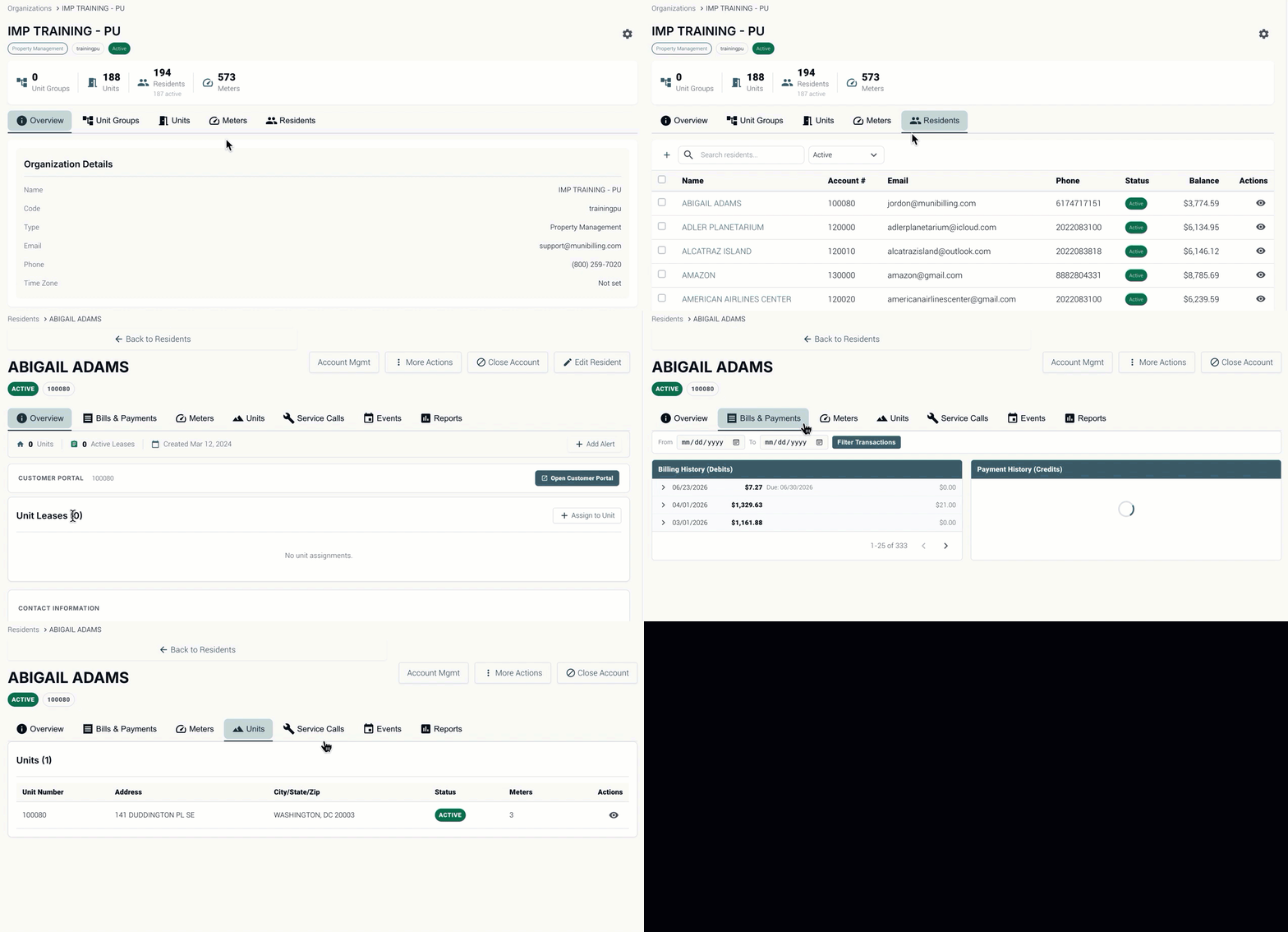
Screens and workflows follow how billing actually happens, not how the database was structured. A billing specialist running a cycle stays in one connected workspace where the cycle status, the exception list, the related accounts, the validation checks, and the posting controls all coexist. The disconnected modules that used to force jumping between billing, reports, configuration, and customer service give way to a single operational surface. Users move naturally through billing, customer service, payments, collections, reporting, configuration, and entity management in the same context.
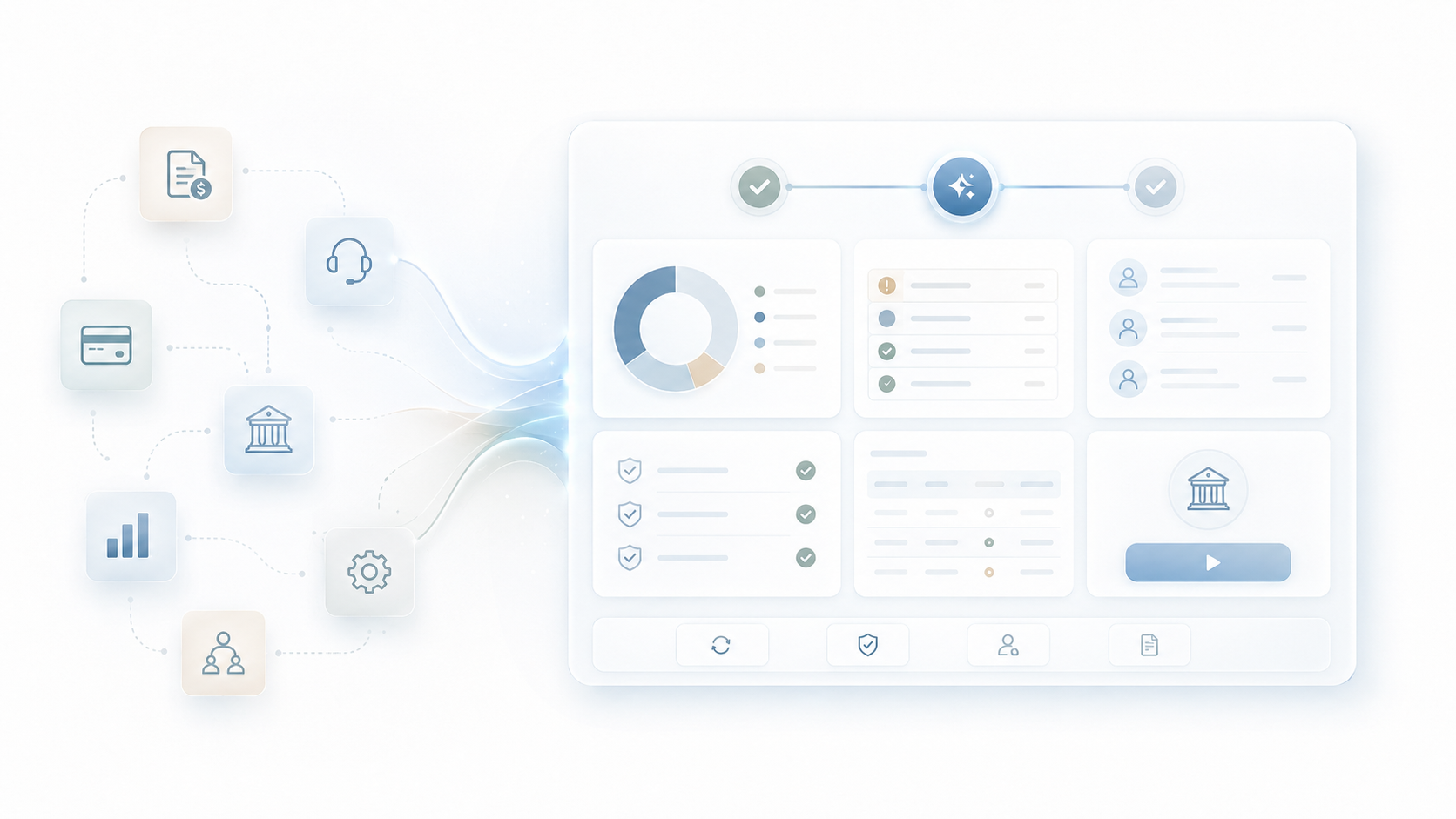
Reports, KPIs, and business rules live inside the screens where work happens. Users do not leave the task to understand performance, validate results, or investigate exceptions. KPI tiles, variance checks, exception summaries, and configuration prompts sit next to the operational record being reviewed. Decisions get made with the supporting data already in view. Instead of leaving the workflow to open a reporting tool, users see the indicators where the work lives.
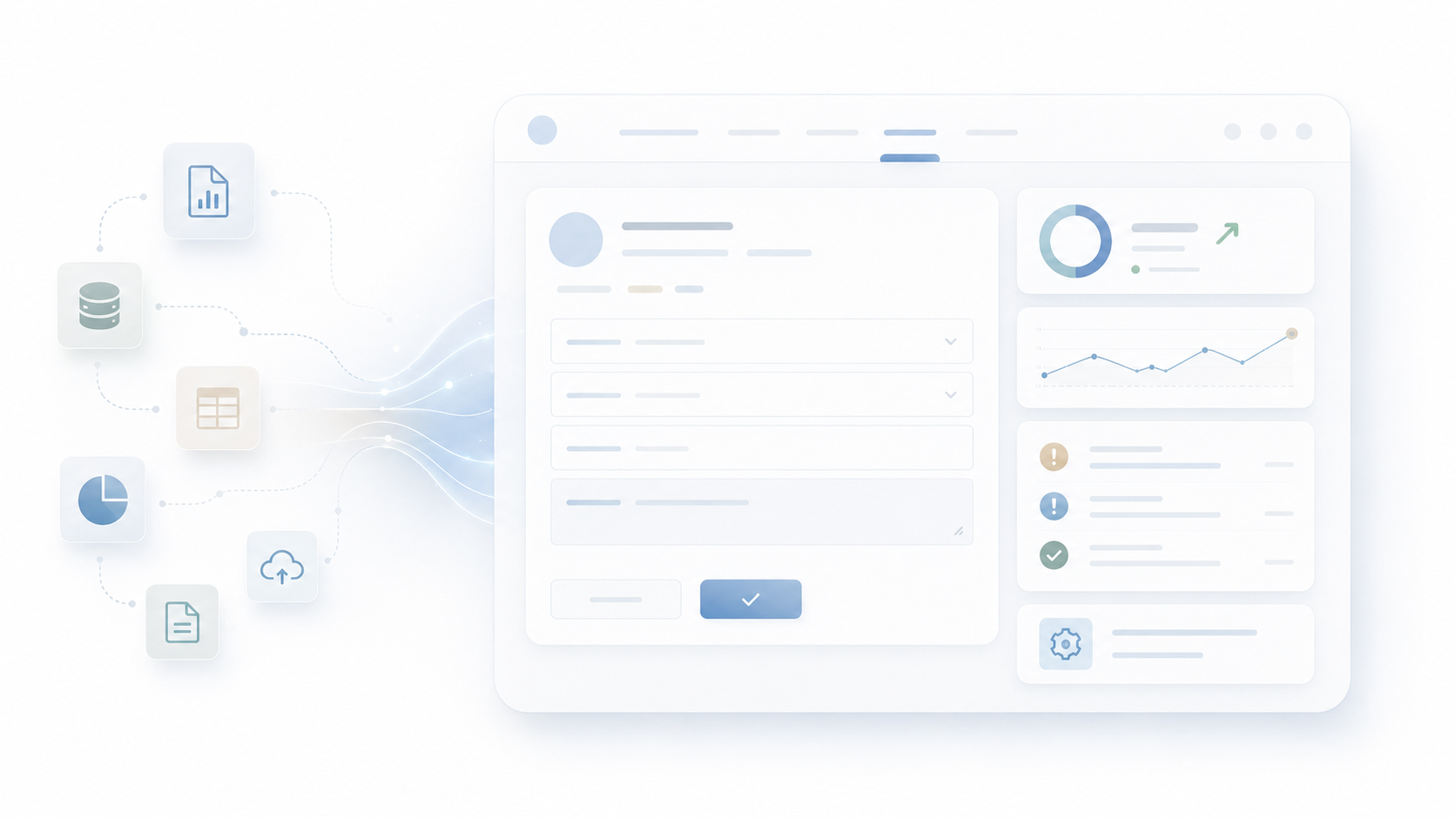
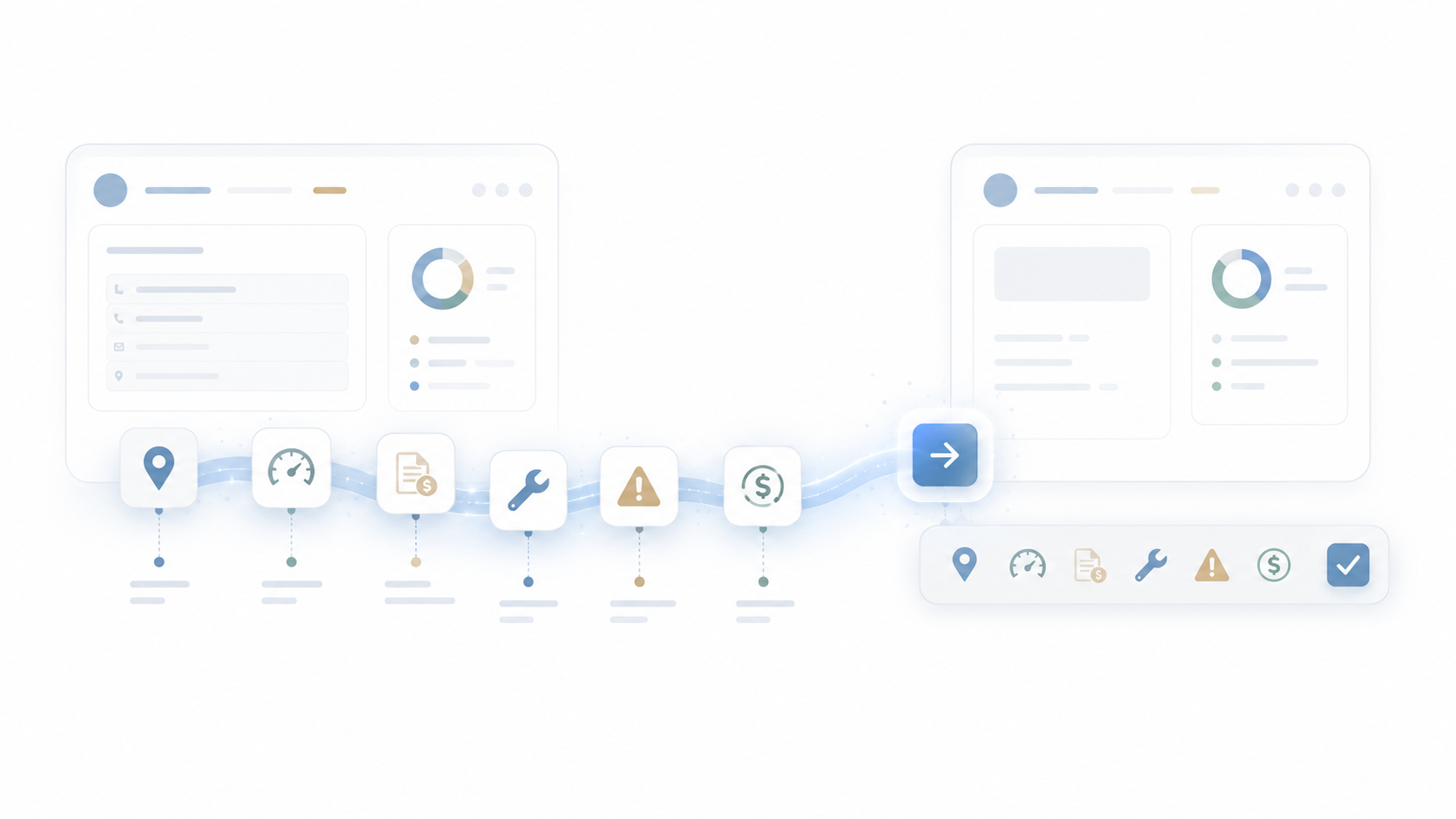
Multi-entity context, related records, and next-step actions travel with the user as they move across screens. The click-trail that wastes attention every operational hour is gone. Open a customer record, and the related location, meter, billing history, open service requests, prior incidents, and recent payments are right there. Cross to a related entity, and the operational context persists. Fewer clicks, less cognitive load, faster decisions in the moment.
Step 01
Conventional platforms organize the user interface around how the database was modeled. There is a billing module, a customer module, a payment module, a reporting module, a configuration module. Each lives in its own screen with its own menu. Users complete a single business task by hopping across four or five modules, copying numbers, opening separate reports, and reassembling the context in their heads. MultiBilling rebuilds the experience around the workflow itself. Before, users navigated the data structure. After, the data structure follows the user through the workflow.
Step 02
Billing specialists complete cycles inside one workspace instead of orbiting across modules. Customer service reps answer questions with the account, the bill, the payment, and the prior issue already in view. Managers review performance without leaving the workflows being managed. Implementation teams configure the system in the same context where the configuration applies. New users onboard faster because the platform mirrors how teams actually work. Across operations, the menu-hunting, click-trails, and context-rebuilding that drain hours every day fall sharply, and staff reclaim more than half of the operations team’s monthly labor for higher-value work.
Step 03
The Innovative UX is the connective tissue across every other MultiBilling function. Universal Insights, the AI Assistant, the Billing Dashboard, CIS, multi-entity management, reporting, and service workflows all share the same workflow-first design. Operational context persists across related activities. Multi-entity context travels with the user. Business rules surface where they apply. The AI Assistant interprets and recommends in context. The result is a platform where complex utility billing operations feel like a connected workflow instead of a series of disconnected modules.
The interface is organized around the work, not the database. Users move through billing, customer service, payments, collections, and reporting in one operational context.
see only the financial, operational, and portfolio information appropriate for their role.
Analytics and business rules live inside the workflow. Decisions get made with the data already present, and configuration aligns to the work it controls.
The platform reduces the cognitive load of daily work, accelerates training, and improves decision quality in the moment.
Universal search reaches across every operational record, returning context that matters for resolution.
Pin the KPIs, alerts, reports, and workflow shortcuts most relevant to each role.
The AI Assistant lives on the Home Page as a navigation partner.
[Customer quote placeholder. 2 to 3 sentences from a billing director or operations leader at a municipal utility, MSO, or property management company. Focus on time saved per cycle or exception backlog reduction.]
Trusted by Utility & Property Operations Teams
Bring us one of the workflows your team finds most painful today, and we will run it inside MultiBilling on a representative dataset. You will see the click-count, the context-switching, and the cognitive load side by side with how your team runs it now. Twenty minutes is enough to see how much of the day is recoverable.
Schedule a demo to explore the platform in detail and see how MultiBilling fits your operations and take the next step toward implementation and purchase.
