


[Customer quote placeholder. 2 to 3 sentences from a billing director or operations leader at a municipal utility, MSO, or property management company. Focus on time saved per cycle or exception backlog reduction.]

Most platforms run billing as a batch engine that grinds out invoices and waits for the cleanup. MultiBilling rebuilds billing as an AI-monitored operational engine. Cloud-based resource management completes high-volume cycles in minutes instead of hours. Exceptions surface before bills generate, not after customers call. Validation happens inside the dashboard with the right checks already in place, so teams move from setup to posting on a single workday. Billing teams reclaim more than half of their monthly labor for higher-value work.
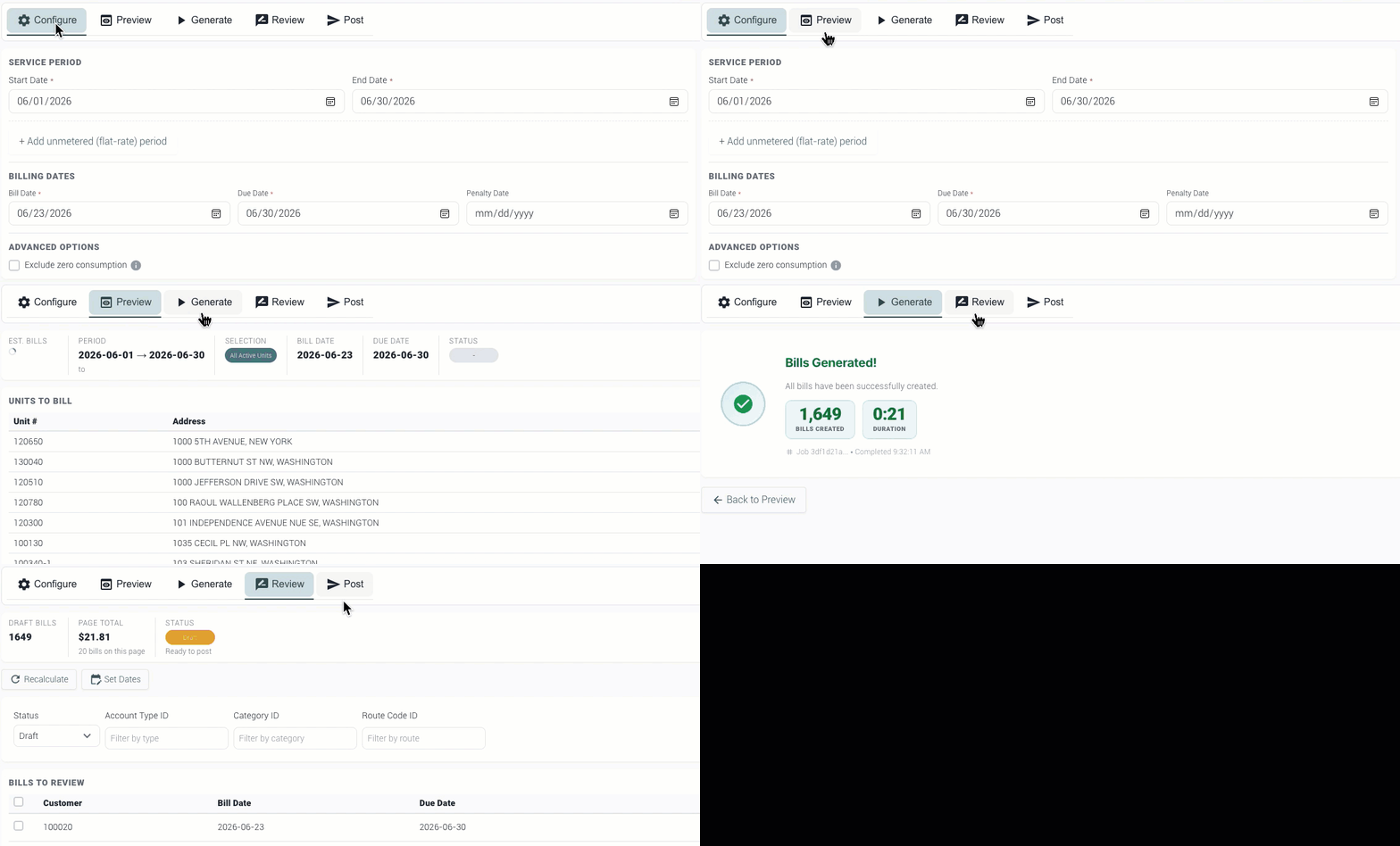
Dynamic cloud resource management completes high-volume billing in minutes instead of hours. A cycle that used to spread across multiple overnight runs now finishes inside the workday, on demand, with progress visible the whole time. Print files, bill images, portal posting, and electronic delivery move through the pipeline in parallel. Teams stop scheduling their week around when batches run and start scheduling around when they choose to post. The pressure of a cycle that drags into next week disappears, and the team gets back to higher-value work the same day.

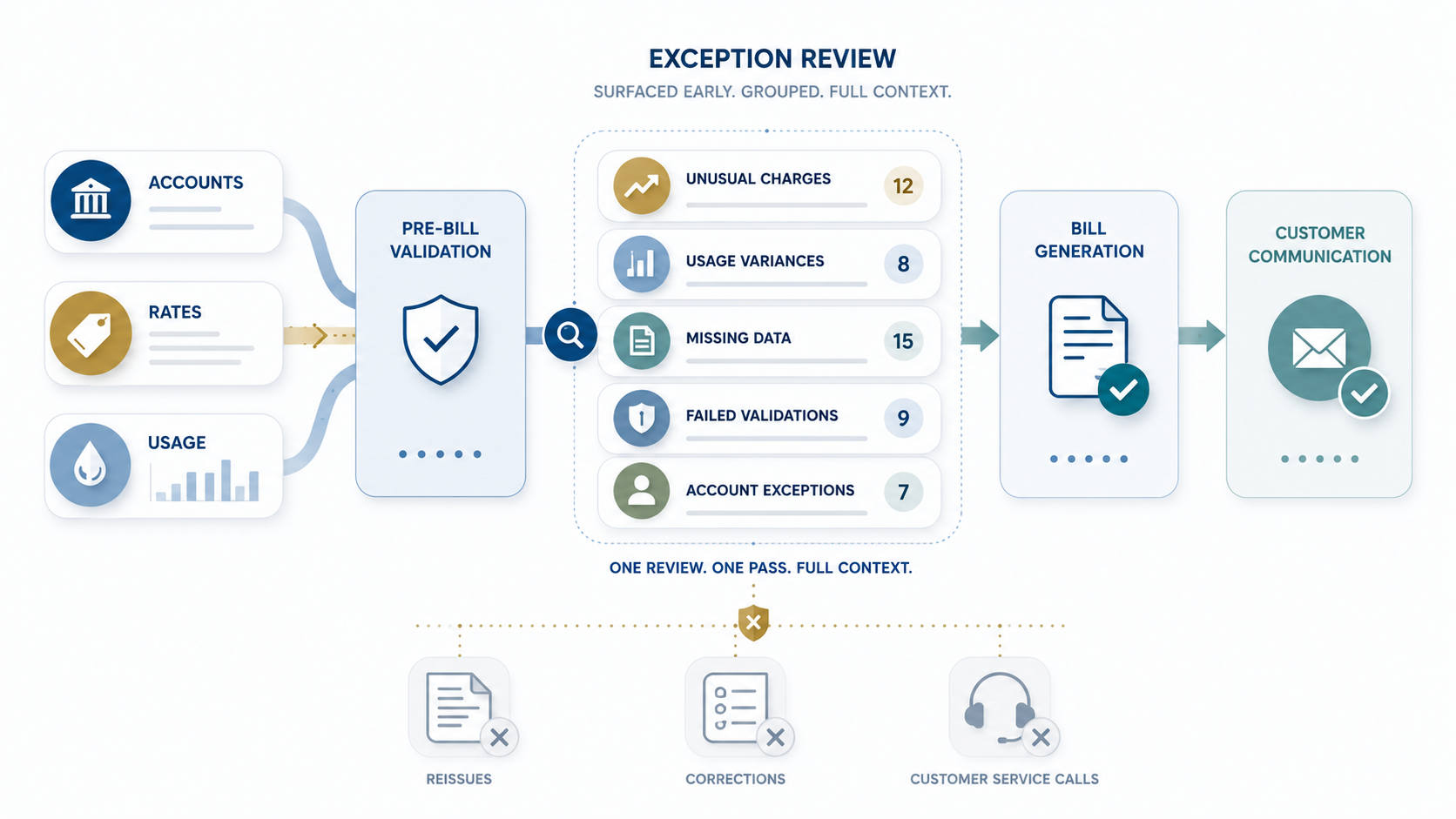
Account, rate, and usage exceptions surface before bills are generated, sparing teams the downstream cleanup of corrections, reissues, and customer service calls. Unusual charges, usage variances, missing data, failed validations, and account exceptions are flagged the moment they appear, with the affected records grouped for review. The team works through the exception list once, in the dashboard, with full context, instead of running cleanup reports for the next two weeks.
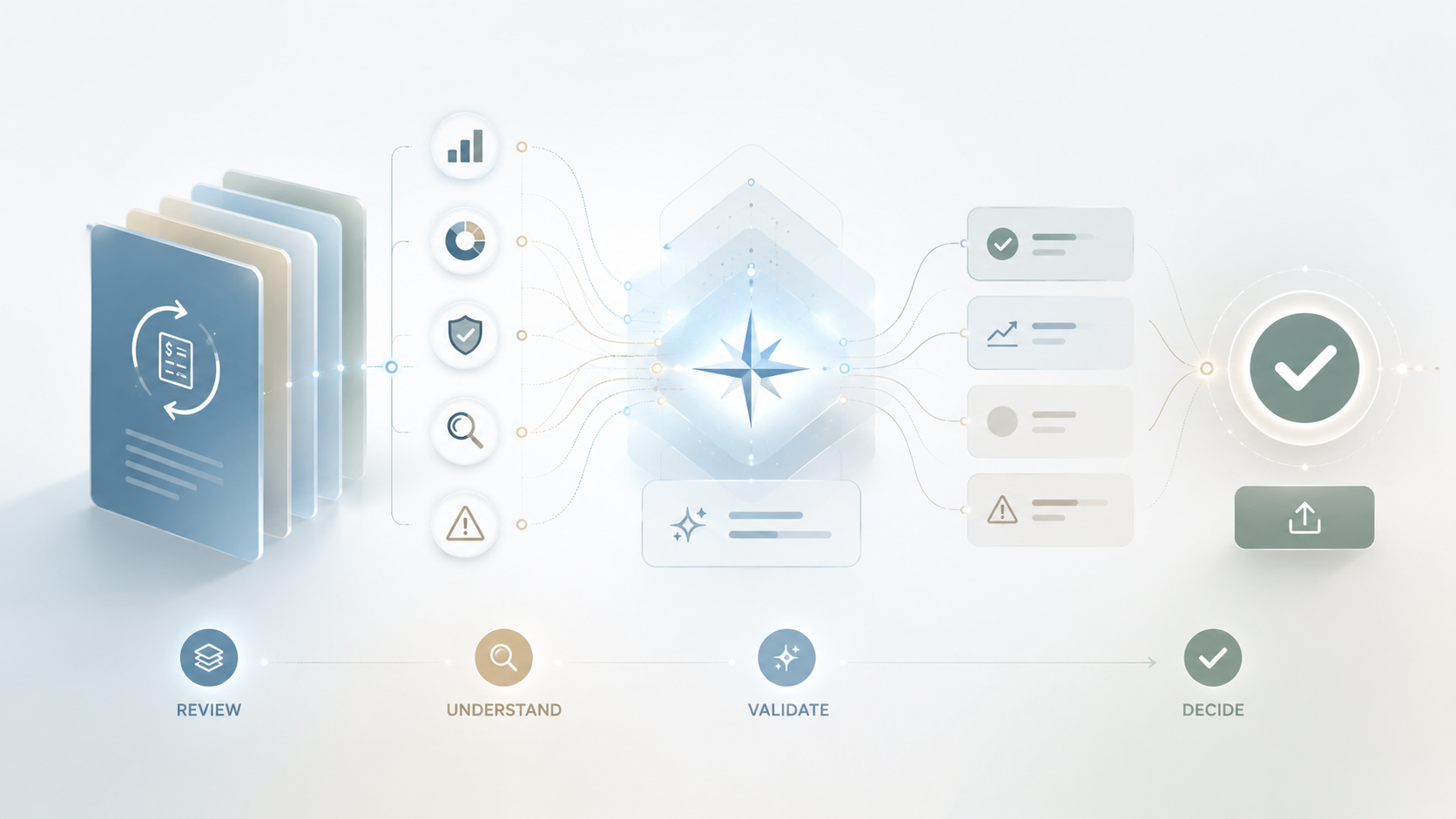
Bill review happens inside the dashboard with the right checks already in place. Users move through validation without juggling spreadsheets, side queries, or hand-rolled exception lists. Integrated insights, variance checks, KPI indicators, and exception summaries show up next to the cycle being reviewed. The AI Assistant explains what changed, why it changed, and what the team should do next. Posting becomes a confident decision, not a hopeful one.
[Customer quote placeholder. 2 to 3 sentences from a billing director or operations leader at a municipal utility, MSO, or property management company. Focus on time saved per cycle or exception backlog reduction.]
Trusted by Utility & Property Operations Teams


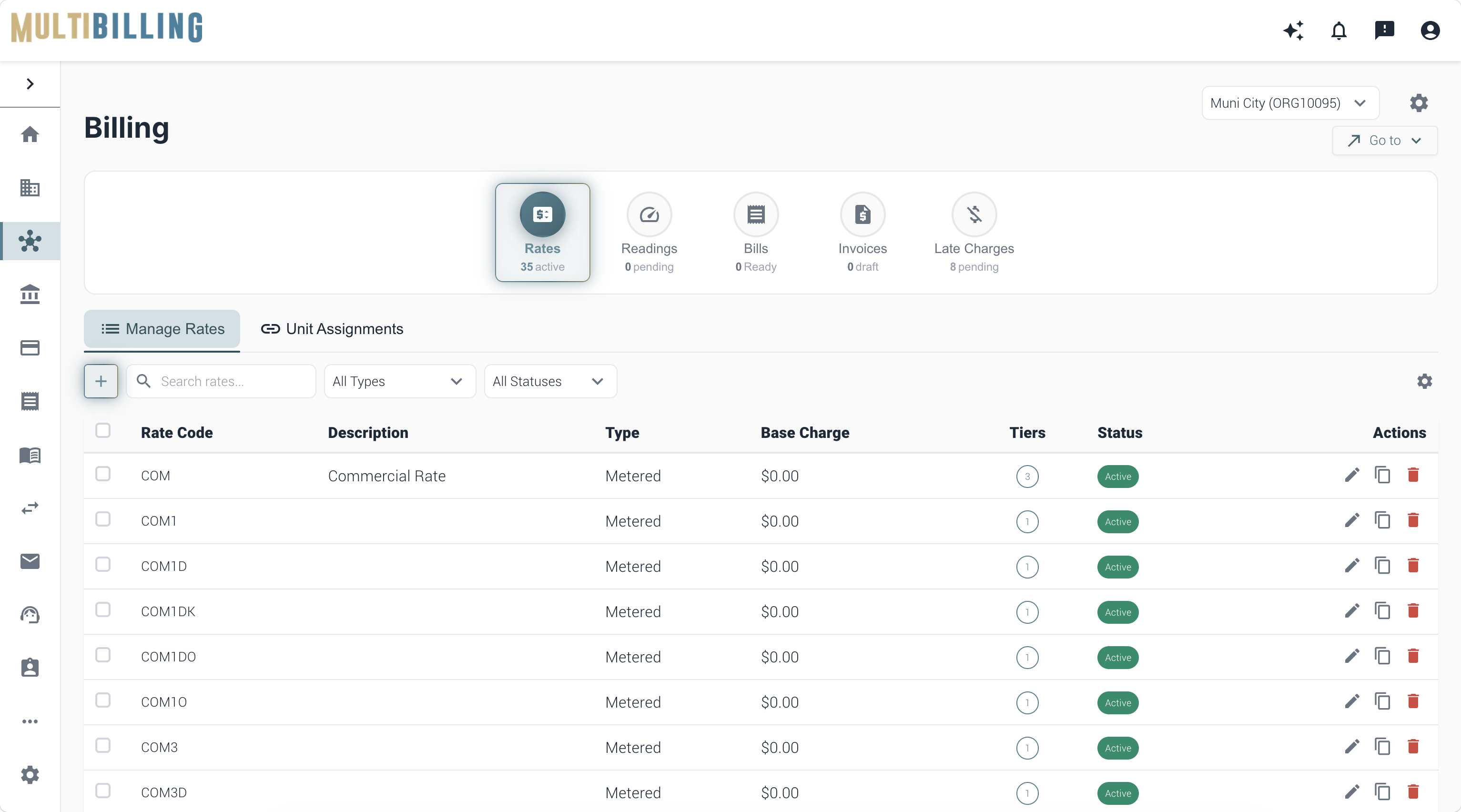
These cards show the main billing workflow steps. Users can quicklymanage their rates, readings, bills, invoices, and late charges.
The section below the workflow buttons updates based on the step you select. Use this area to view and manage the related records, such as rates, readings, bills, invoices, or late charges.
Use this dropdown to switch between organizations. The billing data shown on this page updates based on the organization selected.
Send us your last bill register and a sample of the exceptions your team worked through, and we will show you what the same cycle looks like in MultiBilling. You will see the cycle time, the exception list, and the validation flow side by side with what you ran this month. Twenty minutes is enough to see how much of your billing labor is recoverable.
Schedule a demo to explore the platform in detail and see how MultiBilling fits your operations and take the next step toward implementation and purchase.
.png?width=1448&height=1086&name=Futuristic%20Screenshot%20of%20MultiBilling%20(1).png)