


[Customer quote placeholder. 2 to 3 sentences from a billing director or operations leader at a municipal utility, MSO, or property management company. Focus on time saved per cycle or exception backlog reduction.]

Too many organizations still run field service on paper work orders, printed routes, and delayed office data entry. MultiBilling rebuilds field service as a real-time mobile operation that dispatches assignments to the technician’s phone, captures readings, photos, geotags, and evidence at the point of work, and syncs every completed update back to billing and customer service as it happens. Technicians stop driving back to the office to re-enter data. Connectivity drops do not stop work. Field service and dispatch teams reclaim more than half of their monthly labor for higher-value work.
.gif?width=374&height=504&name=2026-06-24_13-52-47%20(1).gif)
Assignments arrive on the technician’s phone, completed work syncs back as it happens, and billing and customer service teams see updates without waiting for end-of-day data entry. Service requests, meter readings, re-reads, inspections, repairs, disconnects, reconnects, and replacements all manage from the device. The distance between assignment, action, documentation, and closure compresses from a day to minutes. The paper work order disappears. The printed route disappears. The morning data entry session disappears.
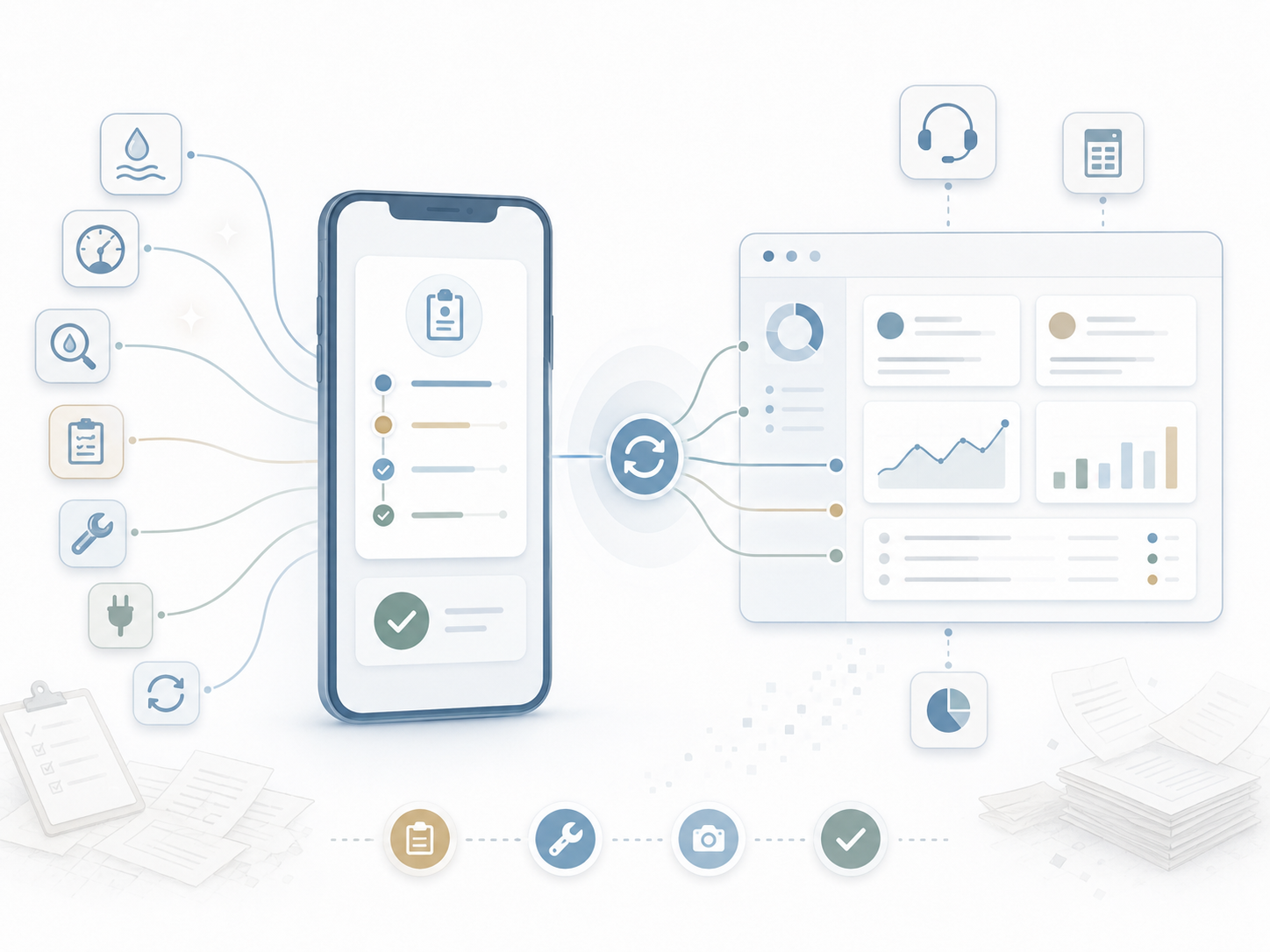
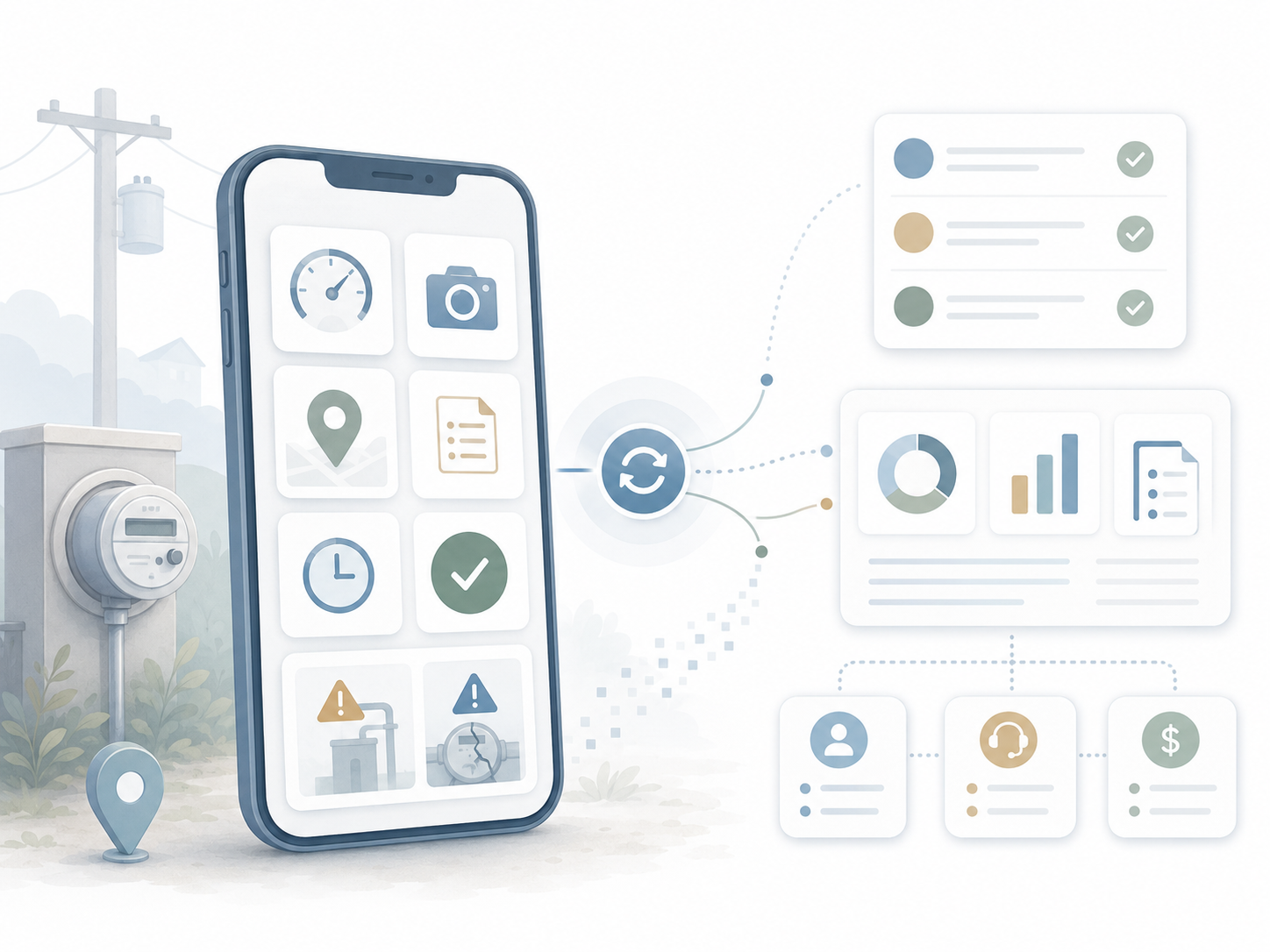
Readings, photos, geotags, and notes capture at the point of service. Billing gets verified data. Disputes get the evidence they need to resolve quickly. Required fields, validation rules, photo capture, geotags, and timestamps ensure field information is complete, accurate, and tied to the correct customer, location, meter, asset, or service request. Exceptions like access issues, damaged meters, unsafe conditions, and skipped readings get flagged on site instead of discovered in the office days later.
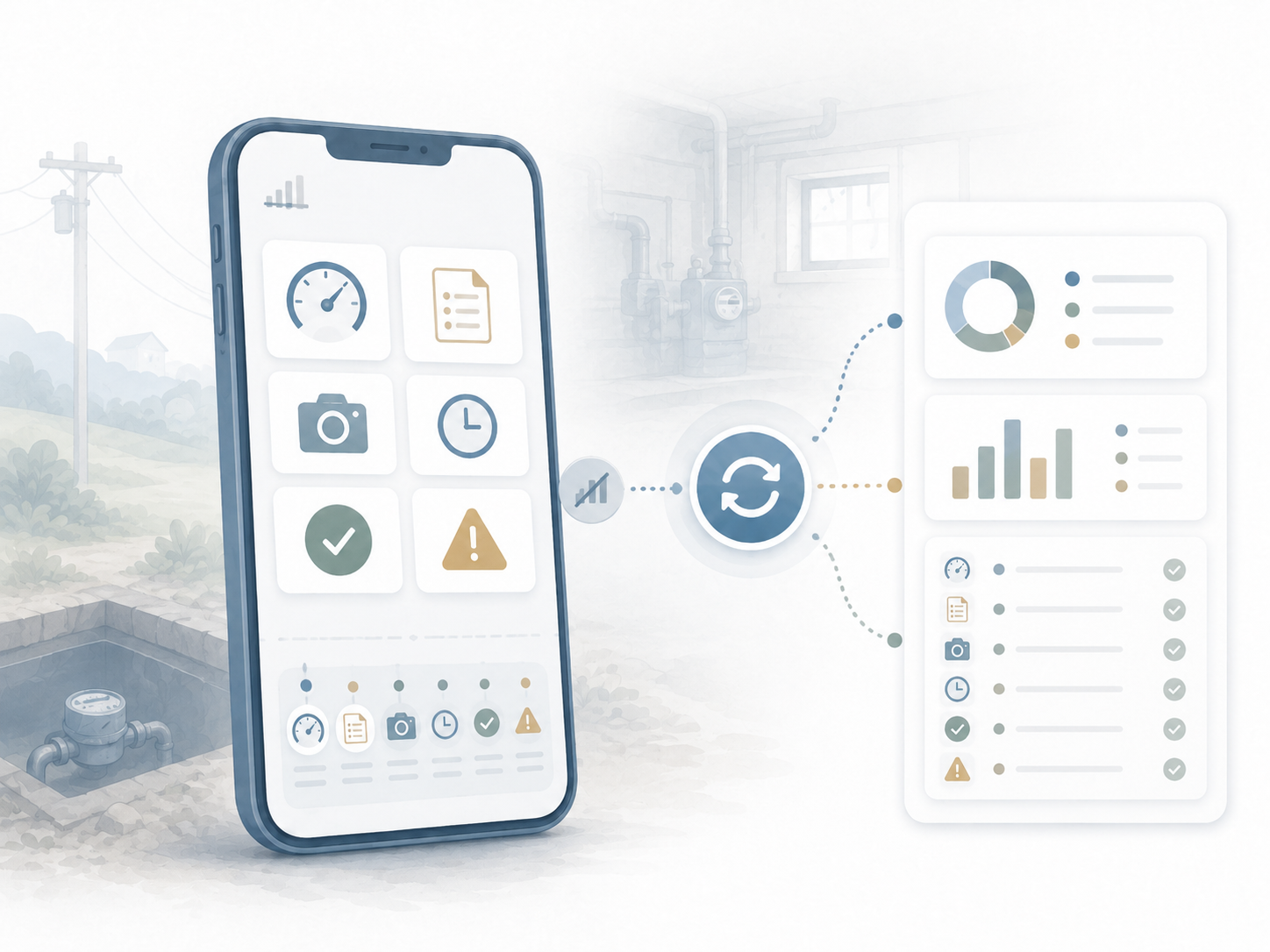
Field work continues when connectivity drops in basements, meter pits, large properties, or rural routes. Service activity, readings, notes, photos, timestamps, and completion details capture offline and sync automatically when the signal returns. A bad reception zone never costs a workday. Off-network capability means the assigned work gets done in the order planned, regardless of the cellular environment at any given stop.
[Customer quote placeholder. 2 to 3 sentences from a billing director or operations leader at a municipal utility, MSO, or property management company. Focus on time saved per cycle or exception backlog reduction.]
Trusted by Utility & Property Operations Teams


Send a technician a phone and we will load the mobile field service app on it for a trial route. Your team will see what offline capture, real-time sync, and structured evidence look like on the routes they run today. The day paper disappears from the truck is the day the labor reclaim starts.
Schedule a demo to explore the platform in detail and see how MultiBilling fits your operations and take the next step toward implementation and purchase.
.png?width=1448&height=1086&name=Futuristic%20Screenshot%20of%20MultiBilling%20(1).png)