One Environment. Every Entity. Local Control, Portfolio Visibility.

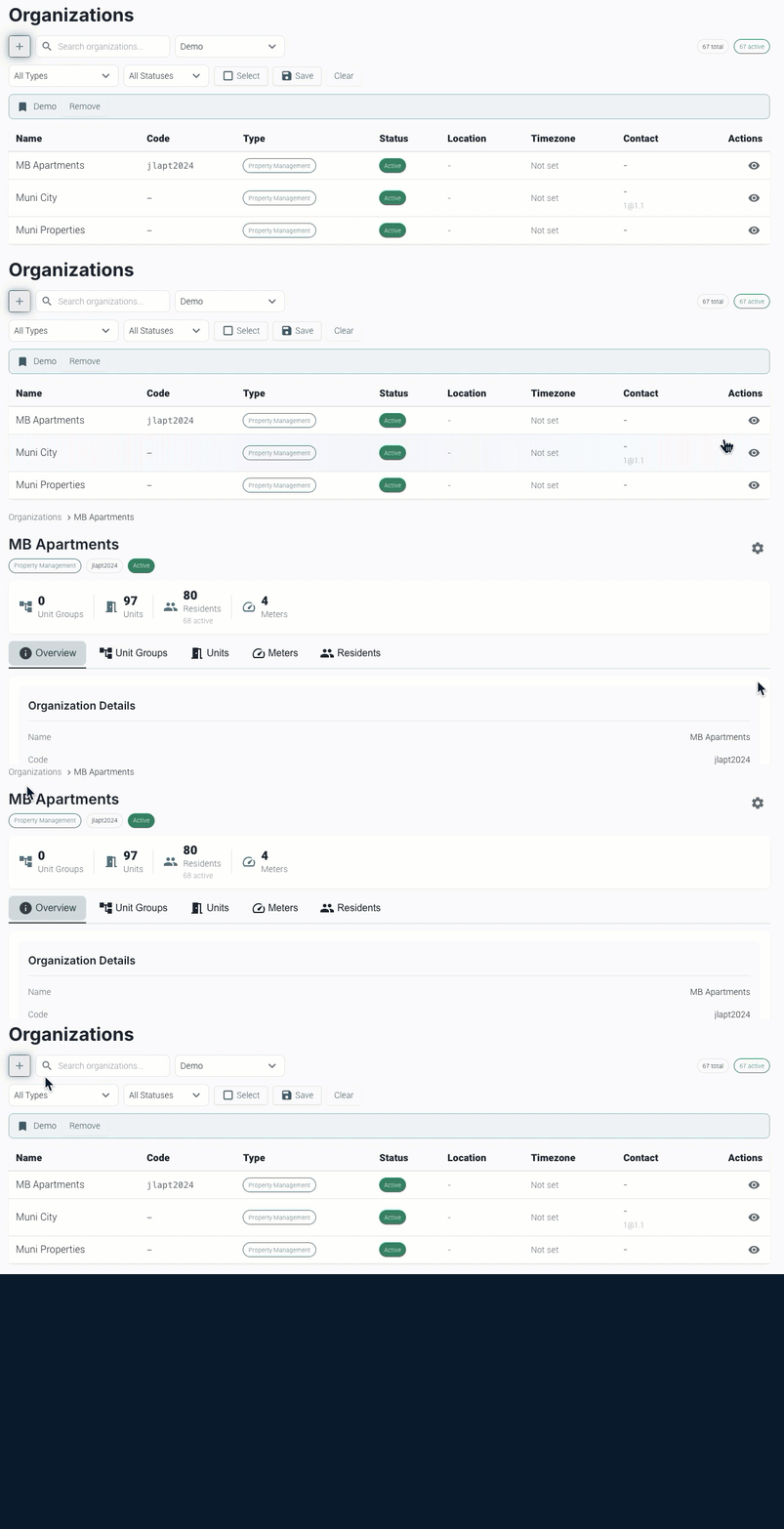
Most platforms manage each entity in isolation, forcing fragmented oversight or, worse, separate logins for every operating unit. MultiBilling rebuilds the portfolio as a single connected operating environment. One account moves across municipalities, properties, regions, and companies without losing context. Each entity keeps its own rules, rates, and permissions. Leaders see consolidated performance, exceptions, and workload across the whole portfolio in one view. MSOs, governments, and property managers reclaim more than half of their portfolio operations team’s monthly labor for higher-value work.

Search Bar

Three Ways MultiBilling Multi-Entity Changes Daily Work

Choose Here
  • One environment, every entity
  • Local control, global visibility
  • Cross-entity exceptions, caught early

One environment, every entity

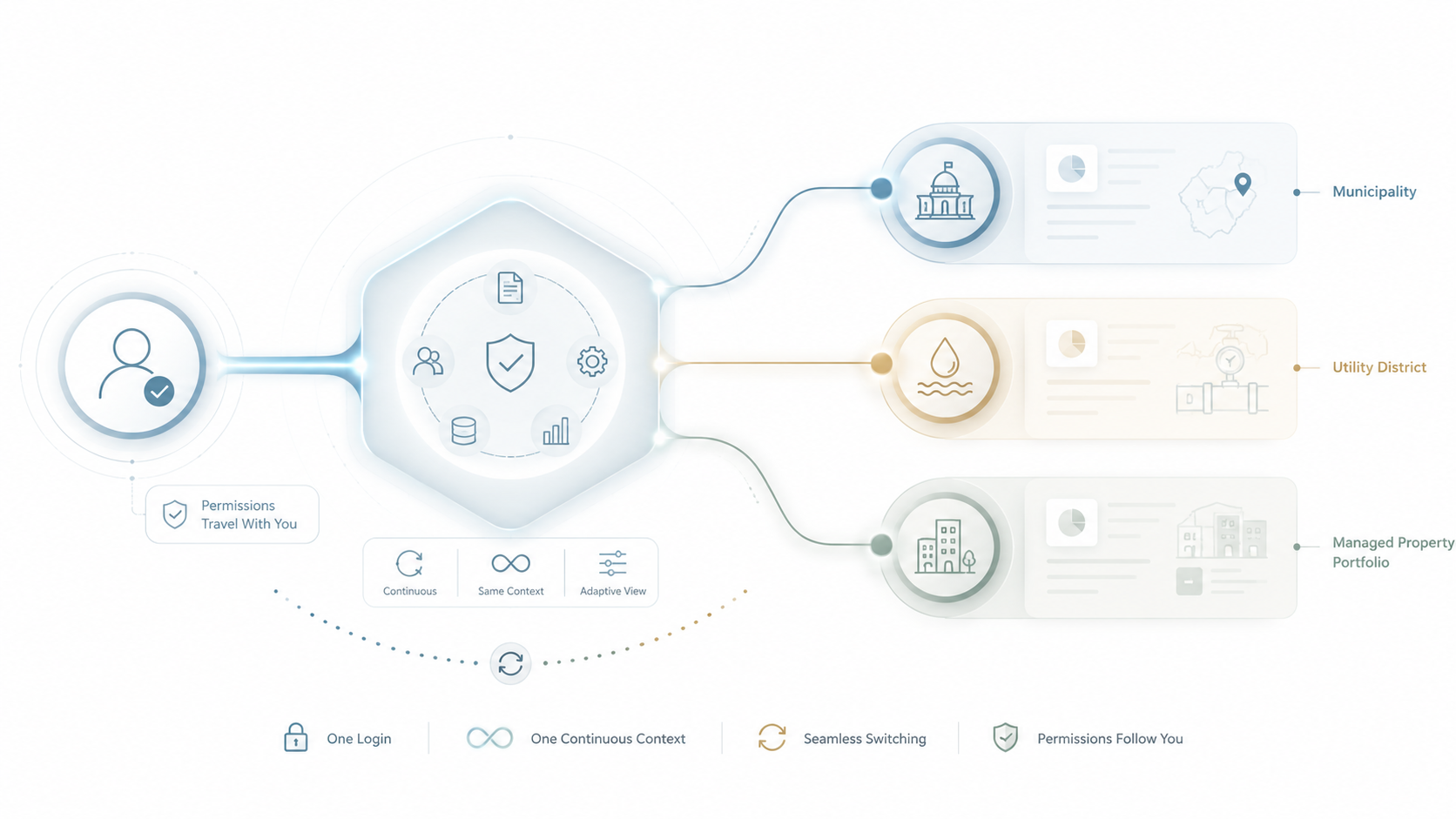
One login. One operational context. Users move between a municipality and the next utility district, between one managed property and the next, without logging out and back in. The dashboards switch with the entity, the permissions follow the user, and the operational context stays intact. The lost minutes of repeatedly authenticating, switching tabs, and reconstructing where the day left off disappear. A managed service operator running ten clients works from one console with the right view for each.

Local control, global visibility

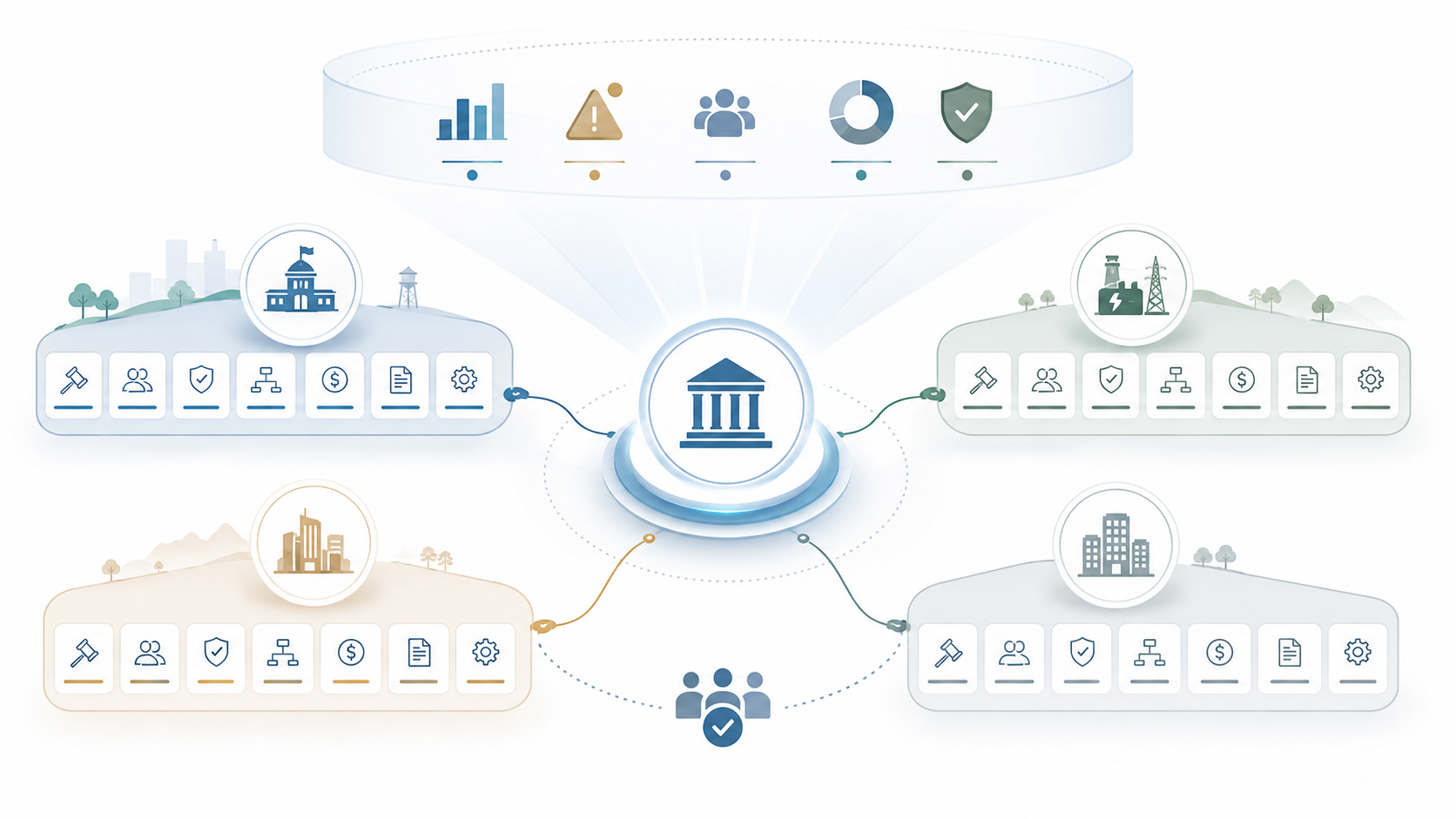
Each municipality, property, region, or company maintains its own rules, settings, users, permissions, workflows, rates, billing practices, reporting views, and operational requirements. At the same time, leaders see consolidated performance, exceptions, workload, and risk across the entire portfolio. Standardized workflows apply across entities so best practices spread, but each entity can still reflect its own policies and operating rules. Centralized governance lives alongside local accountability, instead of replacing it.

Home Dashboard-1

Cross-entity exceptions, caught early

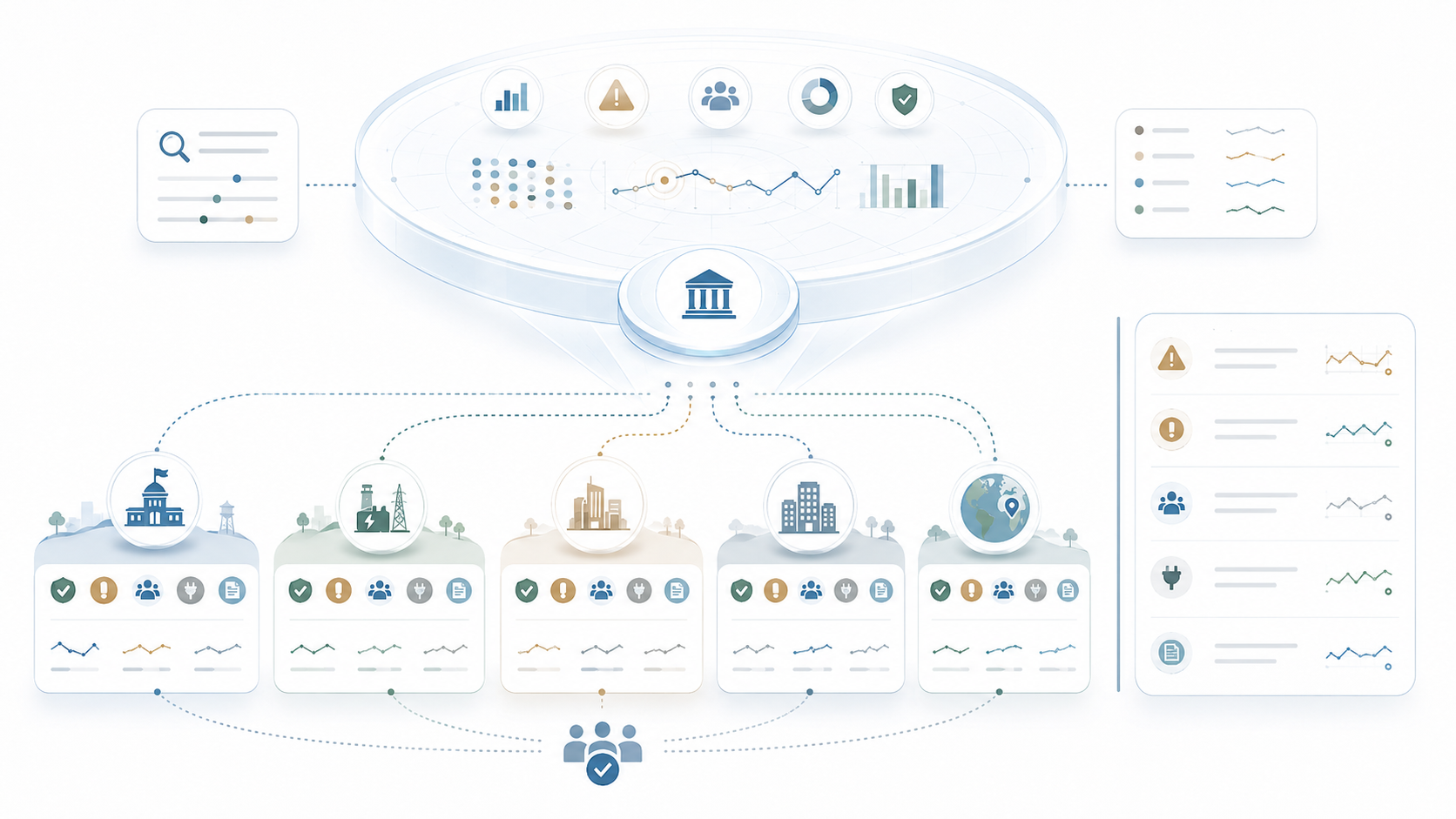
Patterns and risks that span entities surface in one place. A rate misconfiguration in one property, a payment exception trend across several municipalities, a service backlog accumulating in one region: all of these become visible before they compound. Cross-entity search lets users compare performance, detect patterns, and identify the issues that would be invisible if each entity were managed separately. Event-based monitoring triggers notifications across the portfolio when billing cycles, payment exceptions, service requests, or integrations need attention.

AI Help

How It's Different

Step 01

Why MultiBilling Multi-Entity Stands Apart

Conventional platforms scale by giving each entity its own database, its own login, and its own report. The result for managed service operators, governments running multiple departments, and property managers spanning portfolios is a patchwork of logins, exports, and manual roll-ups. MultiBilling rebuilds the portfolio as a single connected operating environment where entity boundaries are preserved as permissions and configurations, not as separate systems. Before, the portfolio was a stack of disconnected instances. After, it is one operating layer that scales governance without losing local control.

ChatGPT Image May 20, 2026, 01_12_24 PM-1

What Changes for Your Team

Step 02

MSO operators run ten or fifty or two hundred clients from one console, with each client’s rules respected and each client’s exceptions visible alongside the others. Municipal staff covering multiple departments stop logging in and out across systems. Property management teams oversee dozens of buildings from a single dashboard. Leaders walk into the day knowing the portfolio posture without compiling a deck. Local administrators retain the configuration control their entity needs. Across the portfolio operations team, the time lost to multi-system navigation, manual roll-ups, and repeat logins falls sharply, and staff reclaim more than half of the portfolio operations team’s monthly labor for higher-value work.

ChatGPT Image May 22, 2026, 03_45_39 PM

Built for the Portfolio Operations Workfow

Step 03

Multi-Entity Management is the operating layer that ties CIS, billing, payments, collections, service requests, reports, and the AI Assistant into one portfolio experience. Role-based access scopes who sees which entities. Regional and portfolio grouping reflects how the organization actually operates. The AI Assistant explains entity-level performance, compares exceptions across locations, and recommends next-best actions. Reporting rolls up by region, property type, service model, or client. Multi-entity oversight becomes a connected, observable, AI-ready workflow that scales without chaos.

ChatGPT Image May 22, 2026, 03_49_03 PM

What MultiBilling Multi-Entity Delivers

A single connected operating environment for one entity or an entire portfolio, with local control and portfolio visibility.

Unified Portfolio Oversight

Portfolio leaders manage one entity or thousands from one operating environment, with the right level of detail and the right level of control for each.

  • Unified oversight across every entity: One environment manages a single municipality, one property, or an entire portfolio of municipalities, companies, regions, properties, associations, or service entities.
  • One account, multiple contexts: Users move between entities without repeated logins, preserving the context needed to manage daily work across organizations.
  • Portfolio-level visibility: Leaders see performance, exceptions, workload, billing status, payment activity, collections risk, service activity, and trends across multiple entities in one view.

Local Configuration and Access Control

Each entity preserves its own operating rules while joining a portfolio-wide governance model. Permissions, settings, rates, and workflows respect entity boundaries.

  • Entity-specific control: Each municipality, property, region, or company maintains its own rules, settings, users, permissions, workflows, and reporting views.
  • Role-based access across entities: Users get access to one entity, several, or the full portfolio, with permissions aligned to responsibilities and security expectations.
  • Standardized workflows with local flexibility: Best practices spread across entities while local policies, billing requirements, and service expectations stay intact.

Cross-Entity Intelligence

The portfolio becomes a data surface for cross-entity patterns, AI-guided comparison, and event-driven response.

Cross-entity search and insights: Users search, review, and analyze information across entities to identify patterns and compare performance.

AI-enabled portfolio guidance: The AI Assistant interprets entity performance, compares exceptions across locations, and recommends the next-best action.

Event-based monitoring across the portfolio: Notifications surface when billing cycles, payment exceptions, service requests, incidents, integrations, or collections need attention.

Check out the screen yourself!

You can interact with the dots below to learn more about the screen.

2026-05-21_14-23-29

Unfied Search and Discovery

Universal search reaches across every operational record, returning context that matters for resolution.

Customizable Dashboards

Pin the KPIs, alerts, reports, and workflow shortcuts most relevant to each role.

AI-Assisted Investigation

The AI Assistant lives on the Home Page as a navigation partner.


Built with billing operators, validated in production.

[Customer quote placeholder. 2 to 3 sentences from a billing director or operations leader at a municipal utility, MSO, or property management company. Focus on time saved per cycle or exception backlog reduction.]

review-future

Dr. Alice Bennett

AI Expert, MIT
Case Study

[Customer Name]

[X%]

[Outcome metric: reduction in billing exception backlog, hours reclaimed per month, days saved per cycle]

Ready to See MultiBilling in Action?

Bring us your portfolio map and your entity-level reporting, and we will show you what the same portfolio looks like inside MultiBilling. You will see the consolidated dashboards, the entity switching, and the cross-entity exception monitoring side by side with what you run today. The day you stop logging in to every entity is the day your team gets the labor back.

Schedule a demo to explore the platform in detail and see how MultiBilling fits your operations and take the next step toward implementation and purchase.

Futuristic Screenshot of MultiBilling (1)