Every utility billing vendor will tell you they're "AI-powered". Almost none can tell and show you which workflows their AI actually runs end-to-end. We can.
We didn't bolt agents onto a billing platform. We leveraged our two decades of experience and feedback to create a flexible and scalable billing platform where agents do the hard work while you orchestrate the outcomes.
MultiBilling is the first utility billing platform designed from day one to enable AI Agent participation across every workflow. Not as an add-on. Not as an additional layer. As the operating model that powers everything from the AI Assistant to workflow automations.
The unified billing platform municipal utilities trust to bill residents, recover revenue, and stay audit-ready. Without stitching together five legacy systems.
Trusted by water districts, sewer authorities, utility districts, sanitary districts, special districts, and municipal authorities across North America.
See how it works for utilities
The unified utility billing platform property operators trust to recover utility costs, simplify resident billing, and reduce administrative burden across every property type you manage.
Trusted by conventional multifamily, affordable housing, student housing, manufactured housing, senior living, HOA and condo, build-to-rent, mixed-use, and commercial real estate portfolios.
See how it works for property managers
The utility billing platform managed service operators trust to onboard new clients faster, run billing operations across every portfolio they serve, and deliver audit-ready reporting under their brand. Without rebuilding their stack every time they win a new contract.
Trusted by third-party billing companies, submetering operators, utility management firms, billing service bureaus, HOA billing administrators, outsourced billing consultants, and utility operations managers across North America.
See how it works for managed operators
The unified billing platform municipal utilities trust to bill residents, recover revenue, and stay audit-ready. Without stitching together five legacy systems.
Trusted by water districts, sewer authorities, utility districts, sanitary districts, special districts, and municipal authorities across North America.
See how it works for utilities
The unified utility billing platform property operators trust to recover utility costs, simplify resident billing, and reduce administrative burden across every property type you manage.
Trusted by conventional multifamily, affordable housing, student housing, manufactured housing, senior living, HOA and condo, build-to-rent, mixed-use, and commercial real estate portfolios.
See how it works for property managers
The utility billing platform managed service operators trust to onboard new clients faster, run billing operations across every portfolio they serve, and deliver audit-ready reporting under their brand. Without rebuilding their stack every time they win a new contract.
Trusted by third-party billing companies, submetering operators, utility management firms, billing service bureaus, HOA billing administrators, outsourced billing consultants, and utility operations managers across North America.
See how it works for managed operators
Scroll Down To Learn More
Successful utility billing systems aren't built on features alone. They're built on faster operations, stronger cost recovery, and smoother implementation.
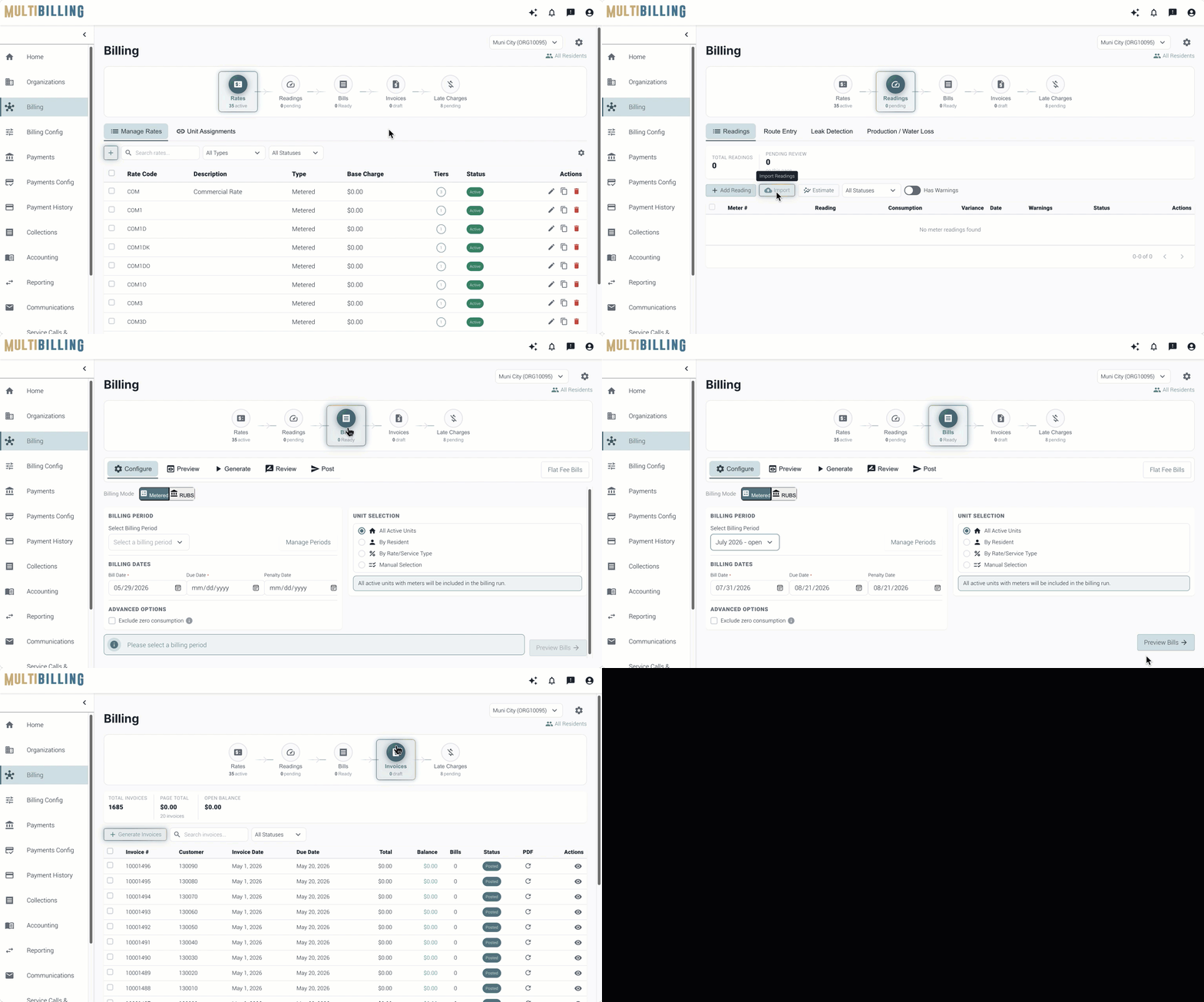
Most of it, on the work your team should not have to do anyway. Automated meter imports, automated billing runs, automated payment posting, and an AI assistant that helps with everyday tasks inside every workflow.
Built-in utility cost recovery (like RUBS), accurate expense allocation, faster collections, and configurable analytics that surface revenue leakage the moment it happens.
Easier than you would expect, and supported every step of the way. A dedicated Client Success Manager (CSM), layered training, documented playbooks, and migration tools that work alongside your existing platform, not against it.
Successful utility billing systems aren't built on features alone. They're built on faster operations, stronger cost recovery, and smoother implementation.
Most of it, on the work your team should not have to do anyway. Automated meter imports, automated billing runs, automated payment posting, and an AI assistant that helps with everyday tasks inside every workflow.
Built-in utility cost recovery (like RUBS), accurate expense allocation, faster collections, and configurable analytics that surface revenue leakage the moment it happens.
Easier than you would expect, and supported every step of the way. A dedicated Client Success Manager (CSM), layered training, documented playbooks, and migration tools that work alongside your existing platform, not against it.
RUBS, expense allocation, and accurate billing close the gap between what you spend and what you recover.
More accurate billing, faster collections, and lower administrative cost flow directly to the operating line.
Automation and an AI assistant help speed up tasks that fill staff schedules and prevent higher-value work.
One platform replaces multiple traditional systems. Unified data, unified workflows, unified reporting.
Self-service portal, mobile app, clear bills, paperless options, and faster answers from your team when they reach out.
Accurate, transparent statements and a complete audit history give you the context to resolve questions in one call.
Assisted move-in and move-out flows reduce vacancy gaps to streamline reconciliation work for resident turnover.
Full audit trails, SOC 2 Type II compliance, regulatory-aligned reporting, and documentation your auditors expect.
Search and analytics, fused
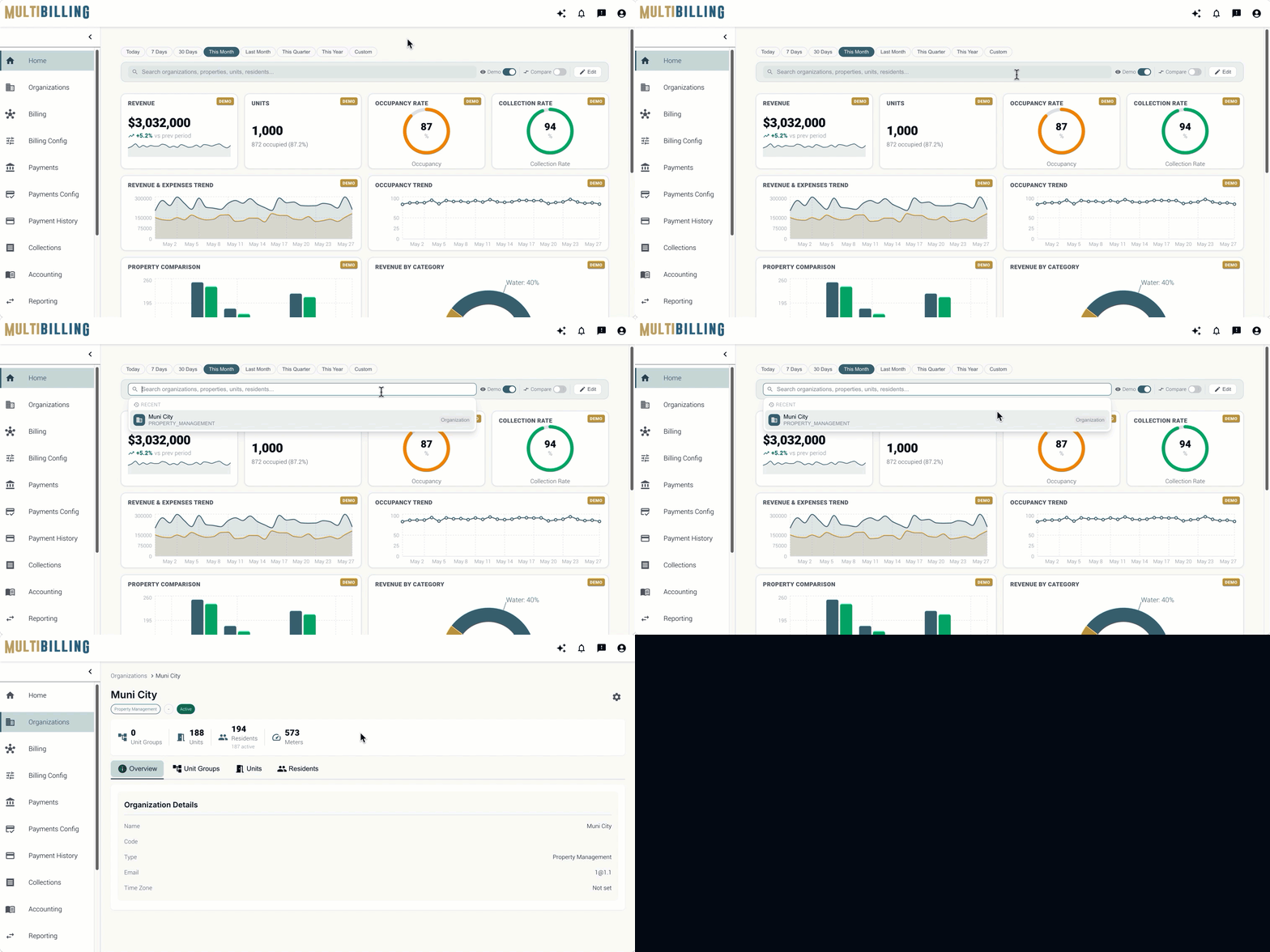
Users can personalize the dashboard to highlight the KPI exceptions, alerts, and trends that matter most, turning it into an actionable intelligence hub that drives smarter searches and faster decision-making.
KPIs tuned to your role
Each user sees the dashboards, alerts, and workflows that matter to their day, so billing, field, customer service, and executive teams all start the morning with insight that's actually relevant.
From search to next action
The MultiBilling AI Assistant interprets KPIs, explains exceptions, and surfaces the next best move from the Home Page, before users have to ask what changed or where to start.
Help where the work happens
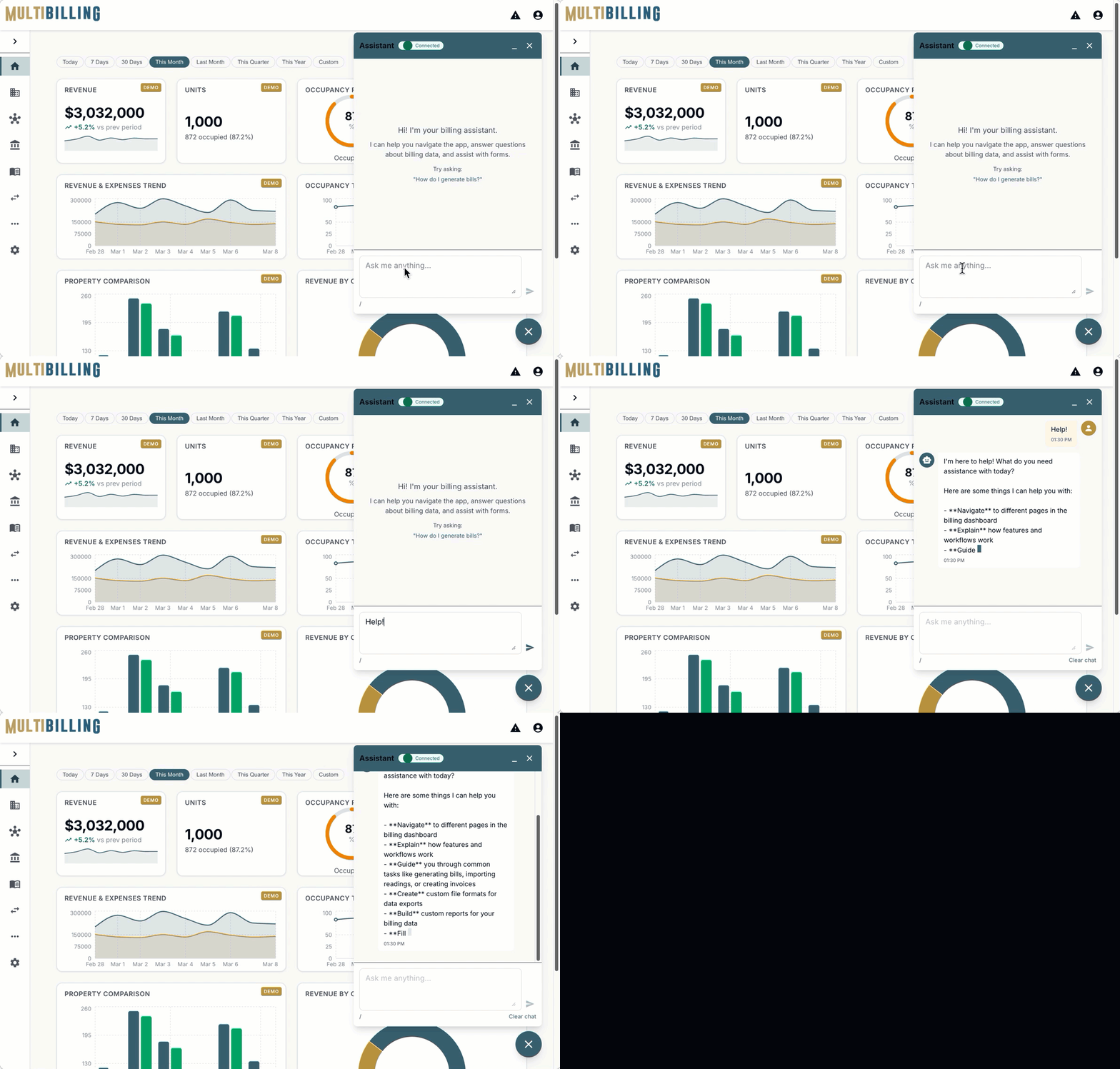
The AI Assistant lives inside every screen as a contextual layer, so guidance arrives in the same place as the task and the next-best action shows up where users are already working.
Learn without leaving the workflow
Users can ask questions in plain language and get step-by-step help instantly, cutting the need to search manuals, watch training videos, or file a support ticket in the middle of a billing cycle.
Data, decoded in place
The Assistant interprets the KPIs, reports, and exceptions visible on screen and recommends the next move, turning operational data into clear guidance the moment it's needed.
Bill cycles in minutes
Dynamic cloud resource management completes high-volume billing in minutes instead of hours, so teams move from setup to posting on a single workday rather than dragging cycles across the week.
Exceptions caught pre-posting
Account, rate, and usage exceptions surface before bills are generated, sparing teams the cleanup work of corrections, reissues, and customer service calls that follow a bad cycle.
Validation guided in the flow
Bill review happens inside the dashboard with the right checks already in place, so users move through validation without juggling spreadsheets, side queries, or hand-rolled exception lists.
A live, real-time customer lifecycle
Every change to customers, locations, meters, and assets streams into the same operational view, replacing the static database approach that lets small updates pile up unnoticed.
Move-ins captured as they happen
The CIS workspace records move-ins, move-outs, and meter exchanges the moment they occur, keeping account, location, and service records aligned for the next billing cycle.
Stop stale data before billing
Outdated customer information is the root cause of most downstream billing exceptions, and MultiBilling resolves changes upstream so dirty data never reaches a bill.
One unified perspective
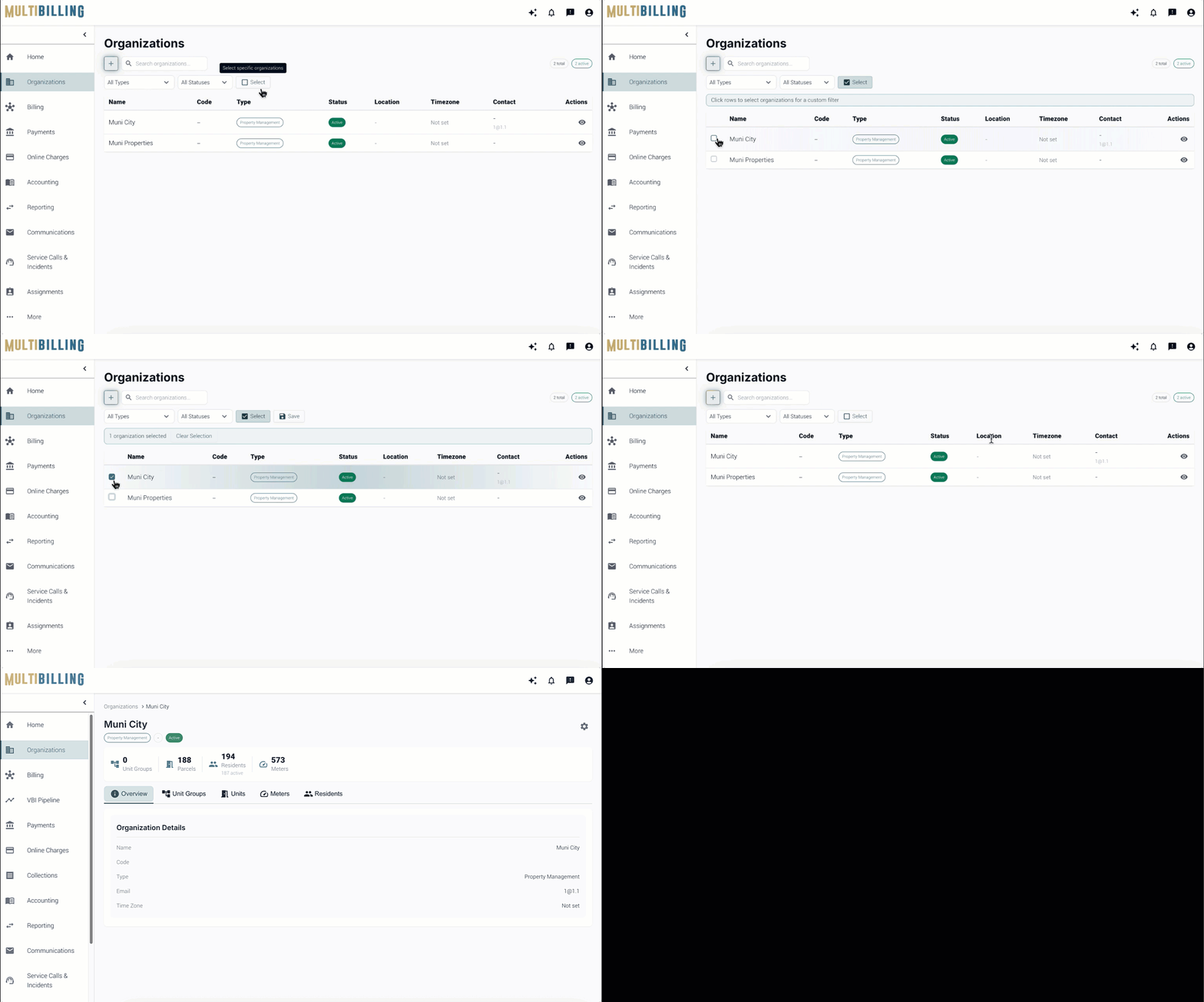
Manage a single municipality or an entire portfolio from one connected operational view - without logging in and out, switching tools, or losing context across workflows, customers, locations, meters, reports, and performance insights.
Local control, global visibility
Each municipality, property, or region keeps its own rules, rates, and permissions while leaders see consolidated performance, exceptions, and workload across the whole portfolio.
Cross-entity exceptions, caught early
Integrated KPI dashboards and reports surface patterns, exceptions, and risks in a unified view, helping teams identify issues early and take action before they compound.
Granular access by responsibility
Permissions match the work each user actually performs instead of being assigned by broad role categories at onboarding, reducing the over-permissioning that creates avoidable risk.
Separation of duties, by design
Sensitive actions like adjustments, postings, refunds, and approvals are scoped at the transaction level, so the wrong person can't accidentally undo, approve, or post something they shouldn't.
Every action audited and traceable
Activity across screens, workflows, reports, and APIs is logged with the user, time, and outcome attached, supporting compliance reviews, audit prep, and post-incident investigation.
Built around the work
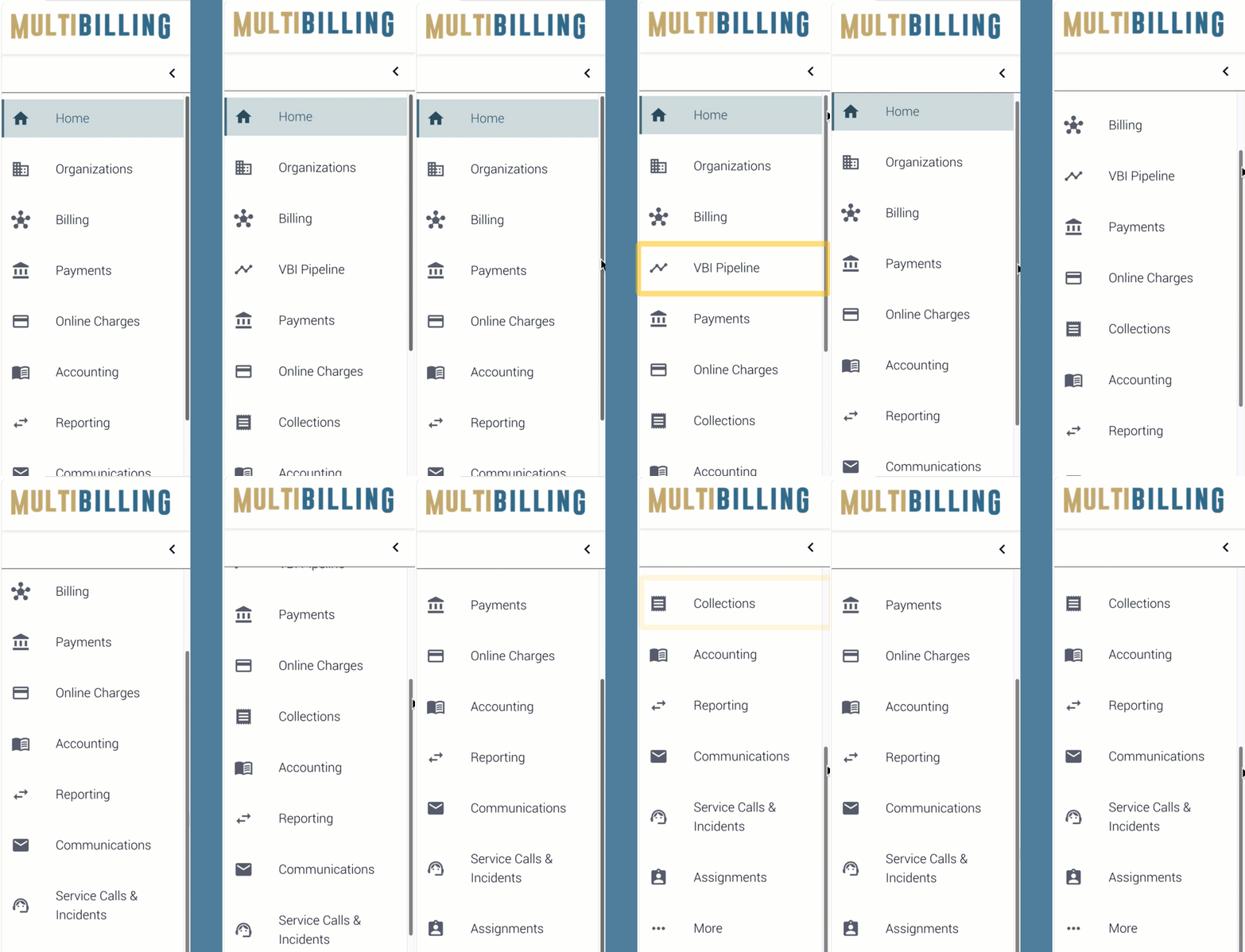
Screens and workflows follow how billing actually happens, not how the database was structured, eliminating the disconnected modules that force users to chase information across the platform.
Analytics embedded in every workflow
Reports, KPIs, and business rules live inside the screens where work happens, so users move from information to action without opening a separate reporting tool or analytics tab.
Stop the menu hunting
Multi-entity context, related records, and next-step actions travel with the user as they move across screens, ending the click-trail that wastes attention every operational hour.
Speaks your operating language
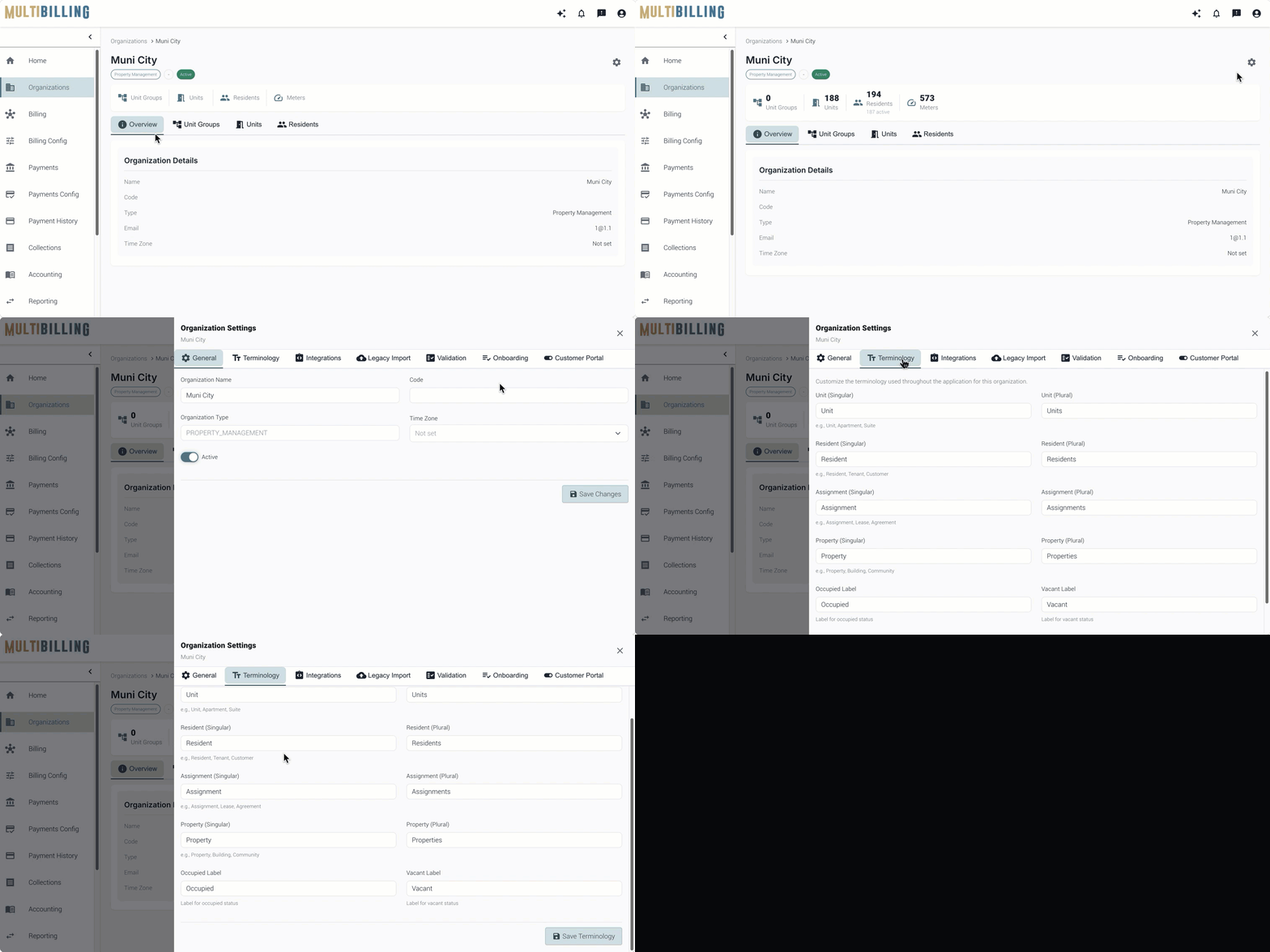
Field names, labels, and screen terminology can be configured to match the words your team already uses, removing the constant translation friction between your business and the platform.
Consistent labels across the platform
Once configured, terminology flows through every screen, workflow, report, and notification, so the language users see in training matches the language they see in production.
AI guidance in your words
The MultiBilling AI Assistant explains workflows, KPIs, and exceptions using the same vocabulary your team uses, making contextual help feel native rather than translated from a generic vendor playbook.
Full power on any device
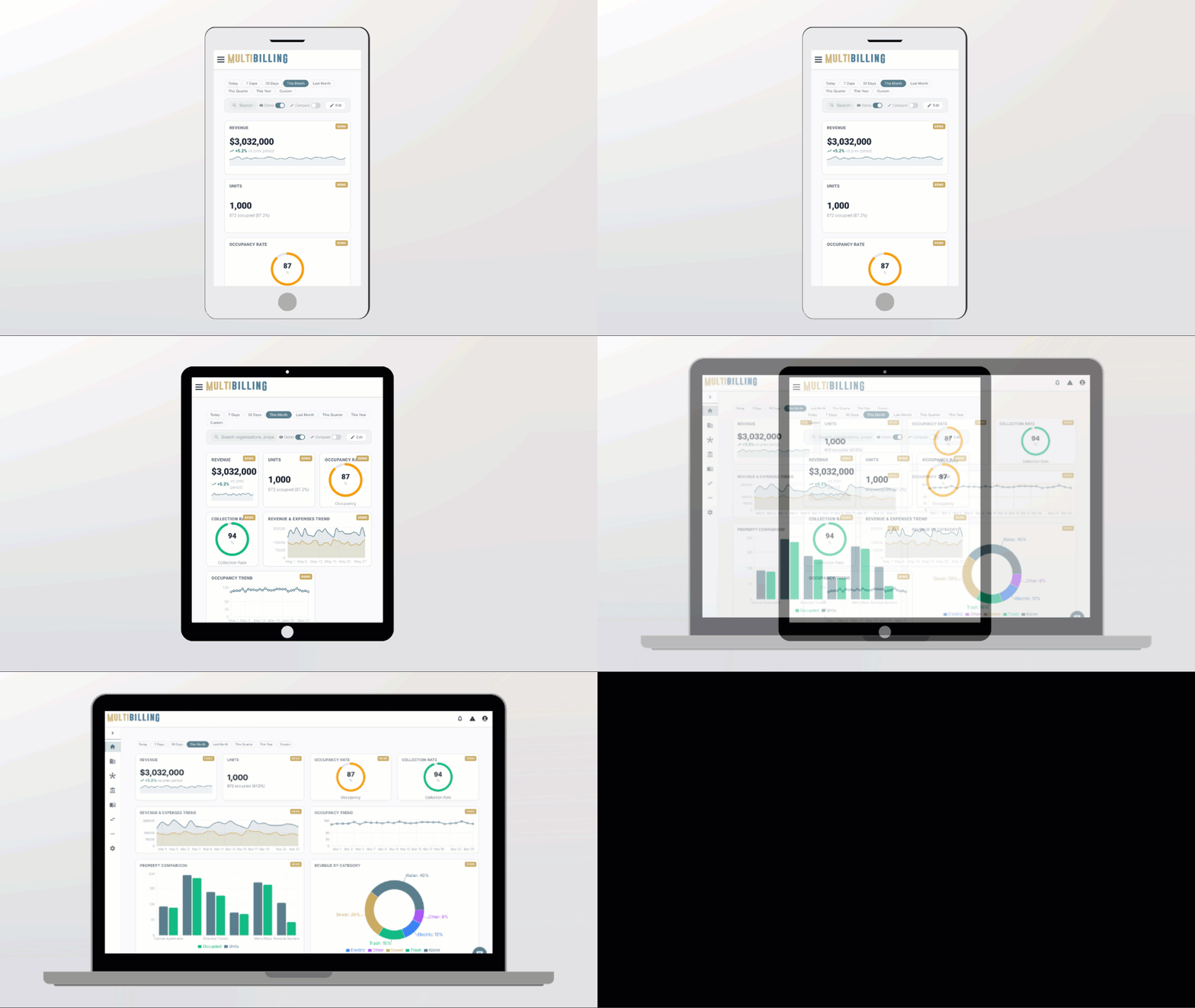
The interface reshapes every screen for desktop, tablet, or phone without stripping away functionality, so users get the complete platform whether they're at a workstation or in a meter pit.
Workflow context follows the user
Records, dashboards, and operational status travel across devices as users move between meetings, the office, and the field, eliminating the lost-place problem that breaks up a workday.
Work from anywhere, lose nothing
Field staff, managers, and executives can review dashboards, approve actions, and respond to exceptions from any device, keeping operations moving even when nobody is at a desk.
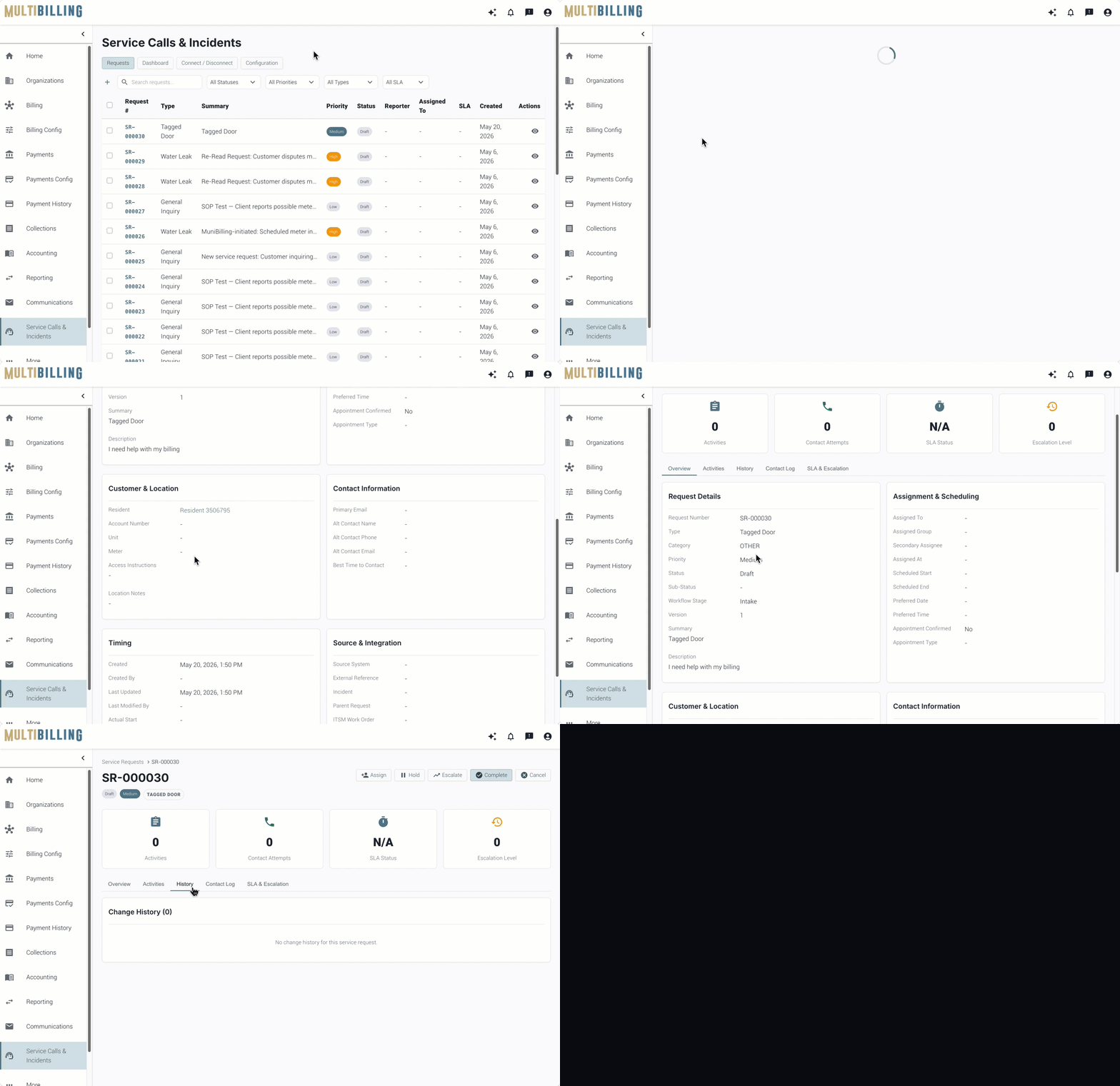
ITIL lifecycle, not a queue
Every issue gets categorized by business impact and routed to the right owner, replacing the generic-ticket queue that buries critical issues alongside minor ones.
Full context in every incident
Account, billing, workflow, and prior-incident history surfaces inside the record, so the team restoring service starts with the picture they need instead of hunting across screens.
Recurring issues become insights
Patterns across incidents surface automatically, exposing the underlying problems that drain support capacity so teams can fix root causes instead of working the same ticket repeatedly.
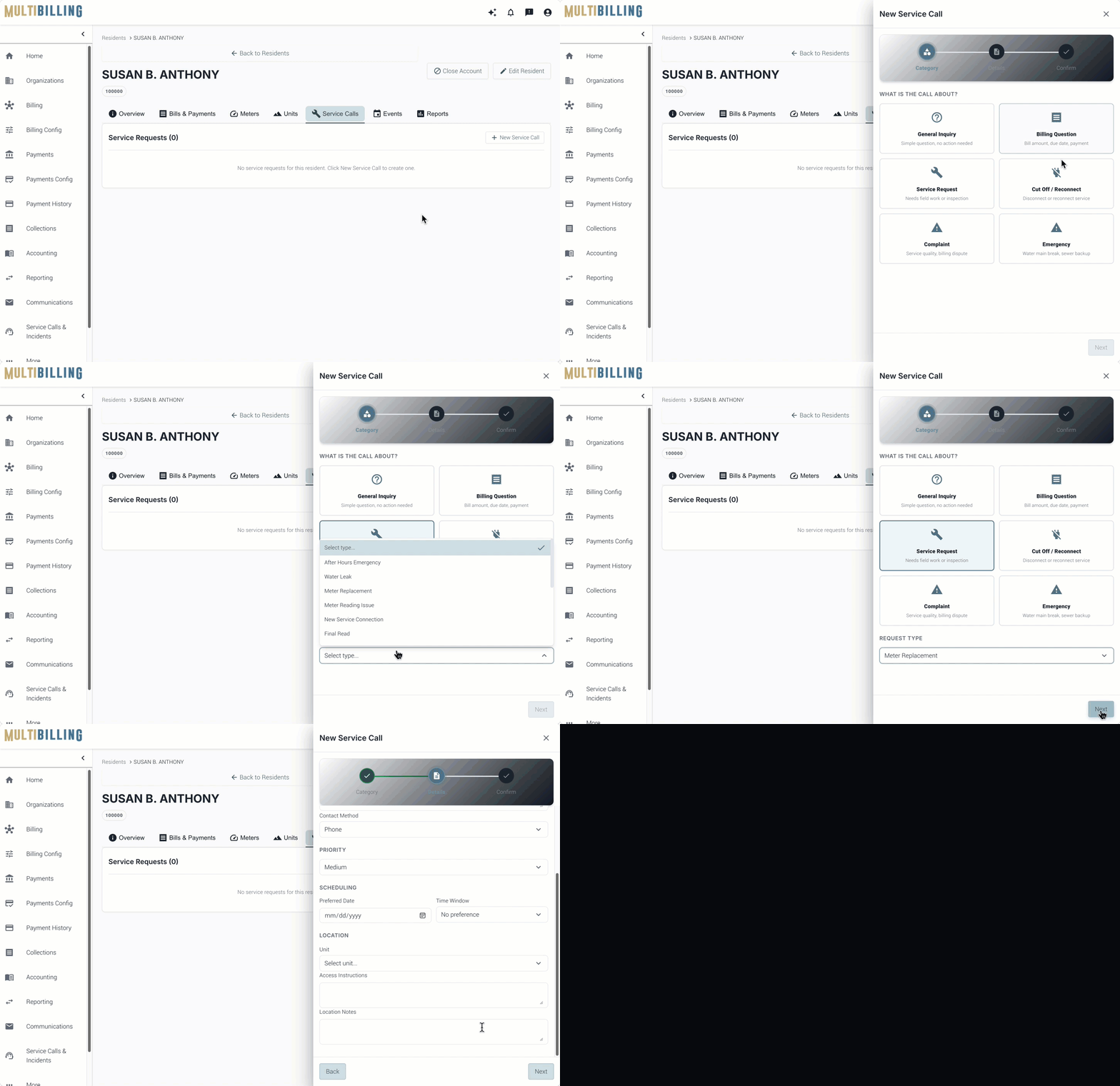
ITSM discipline for service work
Move-ins, meter rereads, inspections, and field requests all flow through a structured lifecycle for intake, assignment, fulfillment, and closure, replacing the spreadsheet-and-email approach to standard work.
One workflow, field to office
Office staff, dispatch, and field technicians work from the same record with the same context, eliminating the handoff gaps that cause callbacks, delays, and missed completion windows.
Closed with audit history
Every request preserves the full record of intake, assignment, field actions, evidence, and resolution, giving leaders the visibility needed for compliance, dispute review, and continuous improvement.
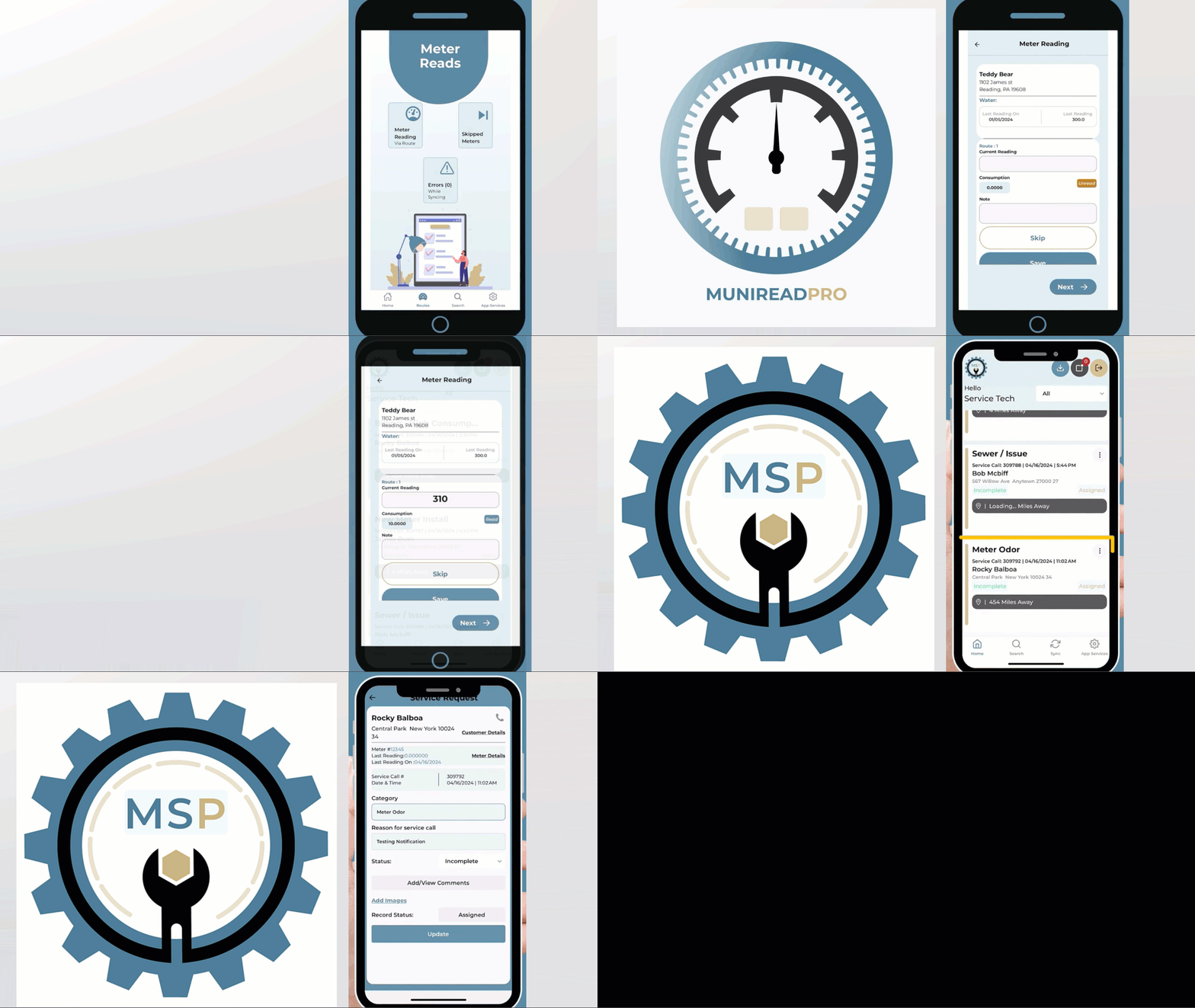
Replace paper with real-time mobile
Assignments arrive on the technician's phone, completed work syncs back as it happens, and billing and customer service teams see updates without waiting for end-of-day data entry.
Capture work where it happens
Readings, photos, geotags, and notes are captured at the point of service, giving billing the verified data it needs and giving disputes the evidence they need to resolve quickly.
Offline mode, no lost work
Field work continues when connectivity drops in basements, meter pits, or rural routes, then syncs automatically when the signal returns, so a bad reception zone never costs a workday.
From reports to performance management
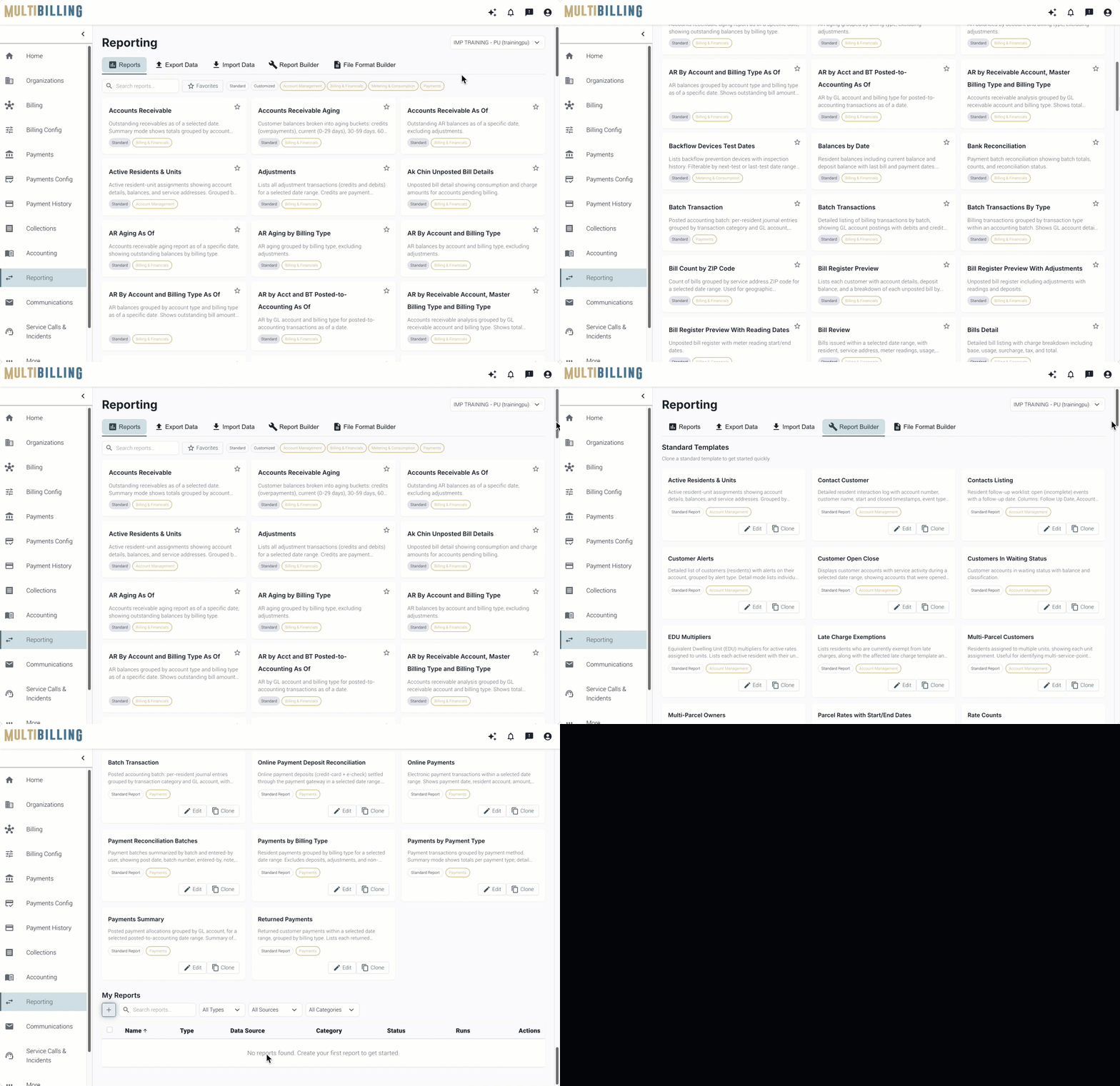
Reports and KPIs are organized by operational domain rather than dumped into a generic library, turning the reporting layer into an engine for managing performance instead of reviewing it after the fact.
KPIs where decisions happen
Performance indicators show up inside the workflows where they matter, so billing, payments, collections, and service teams act on signals in context instead of hunting for them in a separate analytics tool.
Built for AI-augmented analysis
The reporting model is the foundation for AI agents that surface anomalies, predict risks, and recommend actions, so manual slice-and-dice gives way to anomaly detection that arrives before the problem does.
AI triage, no more clicking
The warning triage agent resolves common issues like No-Match-Meter, Missing End Date, and Days Under Threshold automatically, sparing billing specialists from clicking through every flag by hand.
Optimized routes for field re-reads
Re-read assignments arrive grouped by geography and sequenced for minimum travel time, so the technicians chasing exceptions spend less time driving and more time clearing the list.
Cycle close in one day
The meter-to-bill close window can compress from 3-5 days to one, with warnings cleared, re-reads completed, and audit evidence ready for the manager's final authorization.
Rate changes inside billing
Annual updates, fee changes, and program adjustments happen inside the billing workflow itself, ending the handoff to technical staff and vendor scripts that delay every rate cycle.
Preview impact before posting
The financial and customer impact of a rate change is visible before bills are generated, so unusual increases, missing accounts, and configuration errors get fixed upstream instead of after the cycle.
Governed by effective dating
Every change flows through effective-date controls, role-based approval, and audit history, making it safe to apply mid-cycle, retroactive, seasonal, or board-approved updates at scale.
More than a payment page
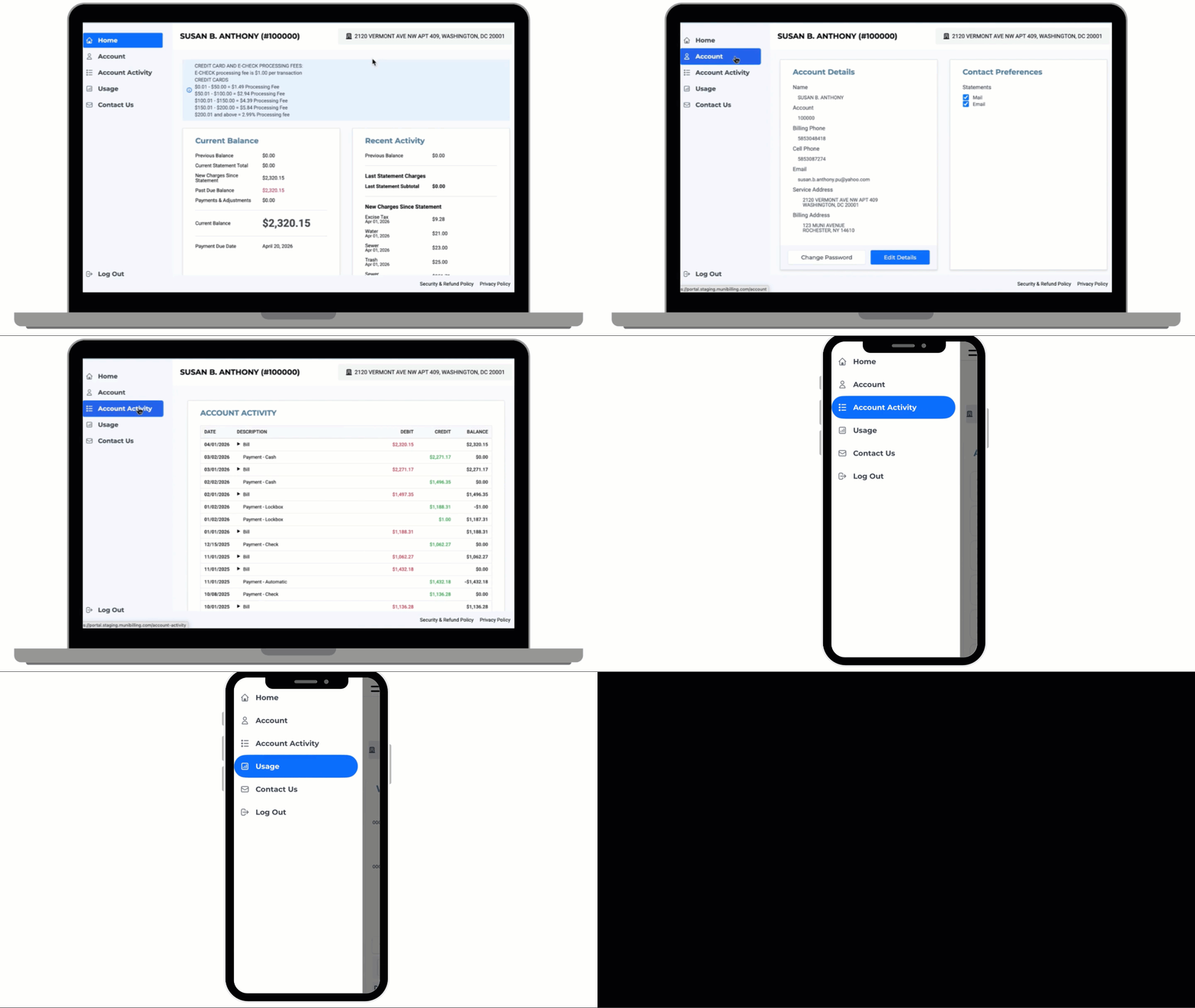
The portal and mobile app open 24×7×365 access to account services, capturing structured intake on every request and issue rather than acting as a single-purpose payment screen bolted onto the office system.
Customers self-serve the basics
Payments, balance questions, move-ins, move-outs, service requests, and issue reports all flow through digital channels, ending the routine status-check work that fragments customer service team time.
Proactive notifications, AI self-service
The AI Assistant guides customers through their needs in plain language while proactive alerts about billing, service, and account events arrive before customers have to ask, turning support from reactive to anticipatory.
Reliability is always on
Critical workflows are monitored 24×7×365 by intelligent agents instead of periodic regression cycles, so reliability is a continuous discipline rather than something reviewed every few weeks.
Catch issues before users do
Monitoring agents detect anomalies, stalled processes, and exception patterns the moment they emerge, sparing teams the cross-system lookups and manual status checks that fragment support work.
Tickets created with full evidence
When a check fails, the agent opens a ticket with the supporting evidence, recent changes, and related workflow context already attached, shortening the path from detection to root cause to fix.
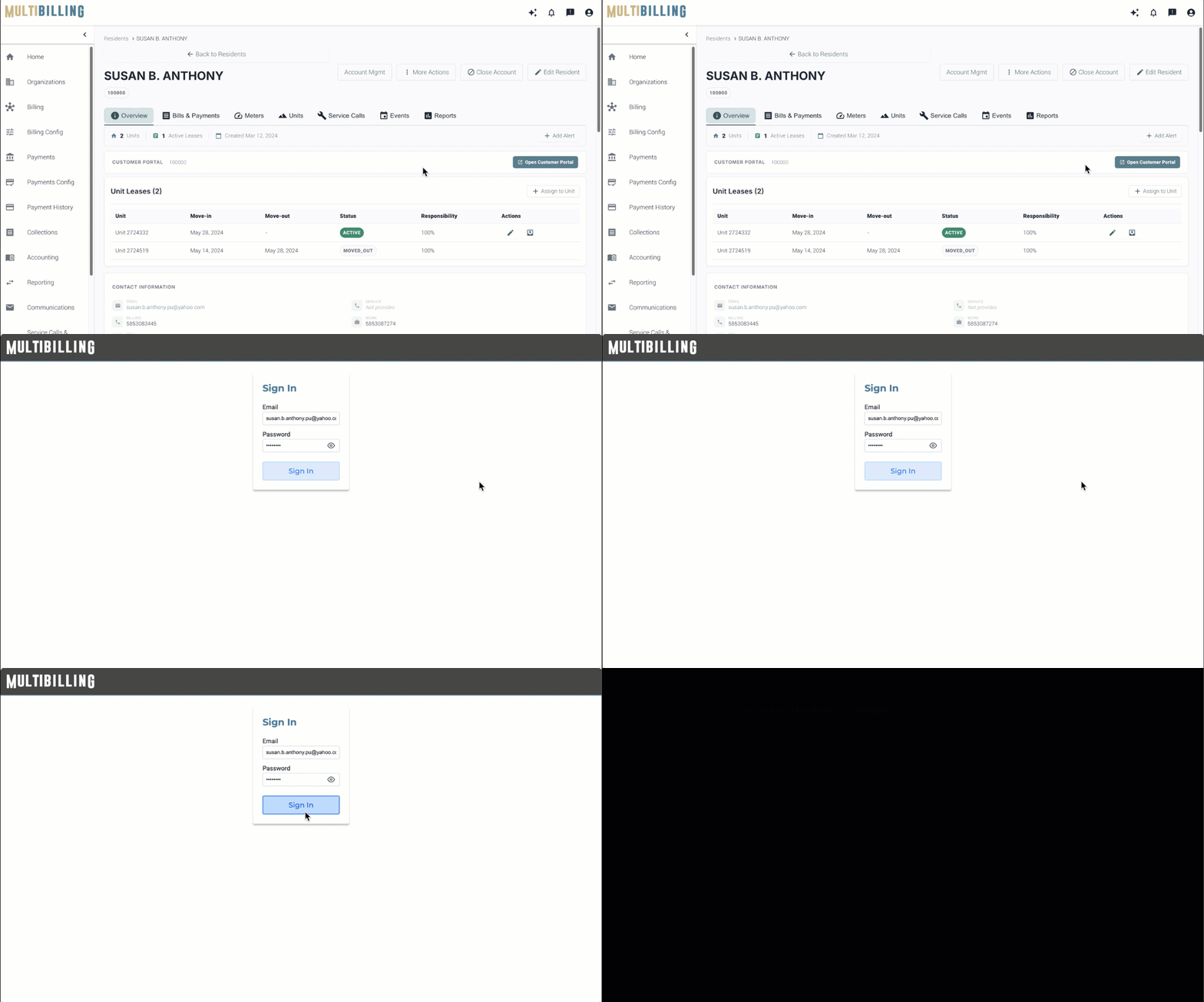
Login via Microsoft or Google
Staff, MSO, and Customer Portal users sign in with familiar federated identities instead of yet another vendor password, with MFA delegated to the identity provider organizations already trust.
PCI-aligned session security
Session timeouts default to 15 minutes for staff and MSO/client users per PCI DSS Requirement 8.1.8, while Customer Portal sessions can run on a different timeout suited to lower-risk self-service.
Sign-ins audited and traceable
Every authentication event, session timeout, sign-out, and provisioning change is logged with the user and timestamp attached, supporting compliance reviews, audit prep, and security investigations.
MultiBilling helps organizations recover utility costs instead of absorbing them by automating billing across multiple entities and connected systems.
Faster Billing Cycles
% Billing Accuracy
Reduction in Revenue Leak
Assistance and accuracy very hands on and managable... Personnel is great
Virginia A.
Town ManagerThe software is easy to use/understand and efficient. It make creating my utility bills an easier process. The customer service is helpful and very responsive. Everyone I dealt with was incredibly nice and understanding of the situations.
Brian C.
Utility Billing SpecialistEasy to use, very professional, great support, the total package. We have complete confidence in their ability to handle the important issue of handling our money.
Mark S.
FounderThe accuracy of the software, it is easy to use and dependable. The programmers are willing to modify reports as requested or needed.
Amanda B.
Solid Waste Coordinator, Latah County Solid Waste DepartmentThe processes of collecting readings, preparing bills and adding on payments are now easier and faster call can done within second and minutes... The fast pay entry feature, the meter reading app, meter reading review and the search is real easy the account just pop up on screen
Omowale H.
Director, Government RelationsOverall the program is excellent! The conversion team was always helpful even when I had a special request. I would definitely recommend this program to others.
Victoria H.
Office Manager